

Introduction
When you walk through a home, the doors probably aren’t the first thing you notice. But that’s exactly what makes them so important. Quality wood interior doors quietly elevate your entire space, adding warmth, character, and value without demanding attention.
For Central Florida homeowners and contractors, choosing the right interior doors means balancing aesthetics with practical considerations like humidity resistance and budget. Whether you’re building new construction in Orlando, renovating a historic property, or simply upgrading dated hollow-core doors, understanding your options makes all the difference.
This guide covers everything you need to know about wood interior doors, from material choices and design styles to installation considerations specific to Florida’s climate. You’ll learn what separates solid wood from engineered options, how to choose between pre-hung and slab doors, and what you should actually expect to pay.
Understanding Wood Interior Door Construction
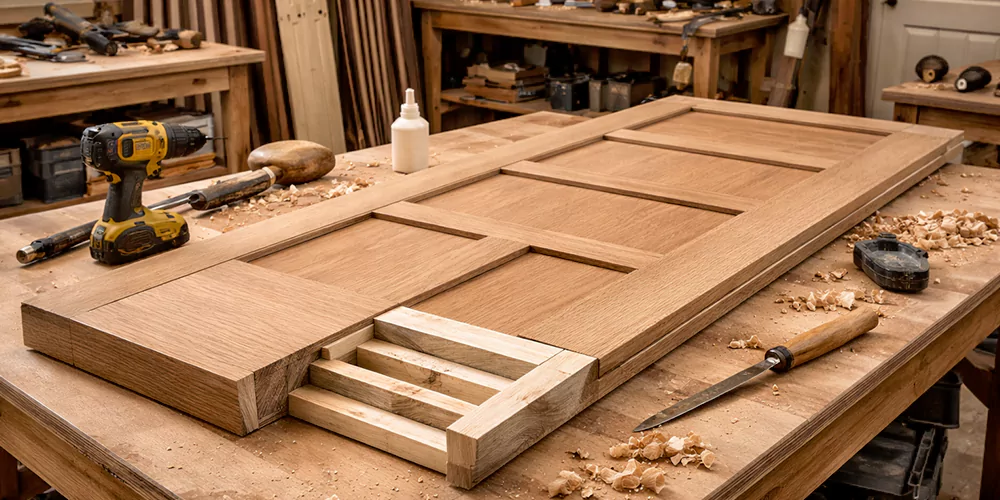
Not all wood interior doors are created equal. The construction method dramatically affects both price and performance, so it’s worth understanding what you’re actually buying.
Solid wood doors are exactly what they sound like: doors constructed entirely from natural wood throughout their core. These represent the premium tier of interior doors, offering unmatched durability and a substantial feel that hollow-core alternatives simply can't replicate.
The weight difference is immediately noticeable. A standard solid wood interior door typically weighs 60-80 pounds compared to 25-30 pounds for hollow-core options. This heft translates to better sound insulation, which matters more than you might think for bedrooms, home offices, or bathrooms.
Popular wood species include oak (both red and white varieties), maple, cherry, mahogany, and pine. Each brings distinct grain patterns and color tones. Red oak delivers that classic, pronounced grain many associate with traditional homes. Maple offers a smoother, more uniform appearance that works beautifully in contemporary settings. Pine provides an economical entry point for solid wood while still delivering authentic character.
From a Florida perspective, the main consideration with solid wood doors involves expansion and contraction. Our humidity fluctuates throughout the year, and solid wood responds accordingly. Proper finishing and occasional adjustments help manage this natural movement. Most quality manufacturers pre-finish their doors with multiple seal coats specifically designed for moisture management.
Solid core doors offer a middle ground between fully solid wood and hollow-core construction. The core uses engineered wood products or composite materials, wrapped in a wood veneer skin. This construction method delivers much of the solid wood experience at a lower price point.
The key advantage here is dimensional stability. Engineered cores resist warping and movement better than solid wood, which matters in climates with high humidity. You still get the weight, sound dampening, and quality feel of a solid door, just with a different internal structure.
Modern wood veneers have come a long way. Many homeowners can't distinguish a quality veneer door from solid wood once it's hung and finished. The veneer thickness and application method determine longevity. Better manufacturers use thicker veneers securely bonded to the core, creating a door that can be refinished if needed over the years.
While our focus stays on wood interior doors with substance, it's worth acknowledging hollow-core alternatives for context. These lightweight doors use a cardboard honeycomb interior between thin veneer skins. They serve perfectly well for closets and less critical applications where budget constraints dominate decision-making.
The trade-offs are clear: minimal sound insulation, less durability, and a noticeably lighter feel. But for rental properties, spec homes on tight budgets, or secondary spaces where performance matters less, they fill a legitimate role in the market.
Types and Styles of Wood Interior Doors
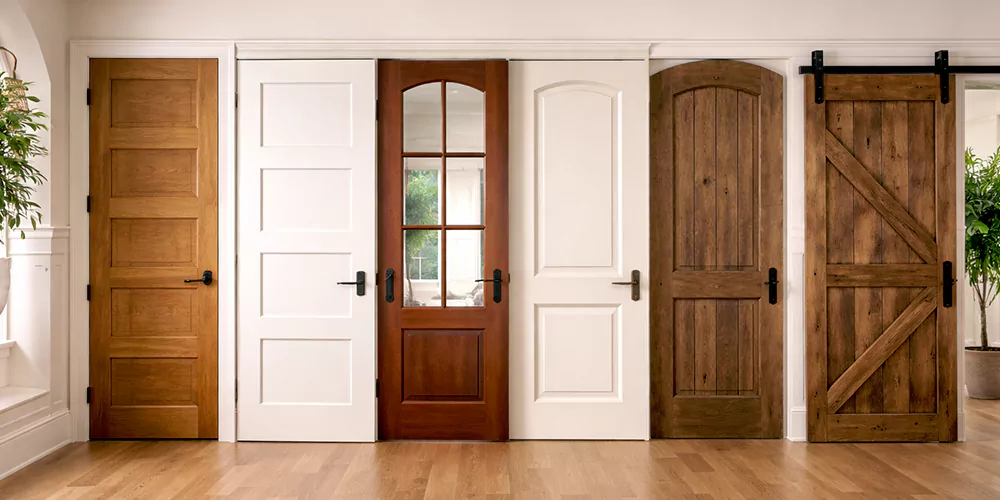
Walking through door showrooms can feel overwhelming. Dozens of styles, countless customization options, and terminology that isn’t always intuitive. Here’s how to make sense of your choices.
Panel doors dominate residential interiors for good reason. Their timeless construction features flat or raised panels set within a frame of horizontal rails and vertical stiles. This design has endured for centuries because it effectively manages wood movement while creating visual interest.
Traditional six-panel doors remain popular in classical and transitional homes. Two-panel Shaker-style doors fit contemporary and modern aesthetics beautifully, with their clean lines and minimal detail. Three-panel and four-panel configurations offer middle-ground options that work across multiple design styles.
The depth and detail of the panel molding significantly impacts the door's character. Deeply sculptured panels read as traditional and formal. Flat or barely recessed panels feel cleaner and more modern. This flexibility makes panel doors incredibly versatile for different architectural contexts.
Flush doors present a completely flat surface with no visible panels or detail work. Their minimalist profile makes them ideal for ultra-modern spaces, mid-century modern homes, or anywhere you want the door to disappear into the wall plane.
Despite their simple appearance, flush doors vary considerably in quality. Premium versions use book-matched wood veneers that create beautiful, continuous grain patterns. Economy options may show visible seams or less carefully selected veneer. The finish quality becomes particularly important with flush doors since there's nowhere to hide imperfections.
Contemporary interior wood doors in the flush style often incorporate horizontal grain orientations or mixed wood species for visual interest without adding three-dimensional detail.
Wood French doors interior applications bring elegance and light flow between rooms. These paired doors typically feature multiple glass panels or "lites" set within the wood frame. They work beautifully for home offices, dining rooms, or any space where you want separation with visual connectivity.
Glass options range from clear views to various levels of privacy glass, textured glass, or decorative patterns. True divided lites use individual glass panes separated by wood mullions, creating authentic traditional character. Simulated divided lites use applied grilles over a single piece of glass, delivering the look at lower cost and with easier maintenance.
For Florida applications, consider that French doors connecting to exterior spaces need enhanced weather resistance and potentially impact-rated glass depending on your building code requirements. Interior-only French doors face no such constraints.
Wood barn doors interior installations have surged in popularity over the past decade. These sliding doors save space while making a design statement. The exposed hardware and sliding mechanism become part of the aesthetic.
Most barn doors use solid wood or solid core construction for stability on the track system. Weight becomes an advantage here, helping the door slide smoothly and hang properly. Styles range from rustic reclaimed wood appearances to sleek, modern painted finishes.
One practical consideration: barn doors don't seal as tightly as traditional hinged doors, so they're better suited for spaces where sound and privacy matter less. They excel in closet applications, powder rooms, and as room dividers in open floor plans.
Wood interior double doors create impressive entries into primary bedrooms, home offices, or formal dining spaces. Unlike French doors with their glass panels, these are typically solid wood panel or flush doors hung in pairs.
The symmetry and wider opening make rooms feel more grand and accessible. Installation requires proper coordination between the two door slabs, often with an astragal (overlapping piece) on one door to create a proper seal. Hardware options include coordinated locksets, ball catches, and flush bolts for the stationary panel.
Material Choices for Wood Interior Doors
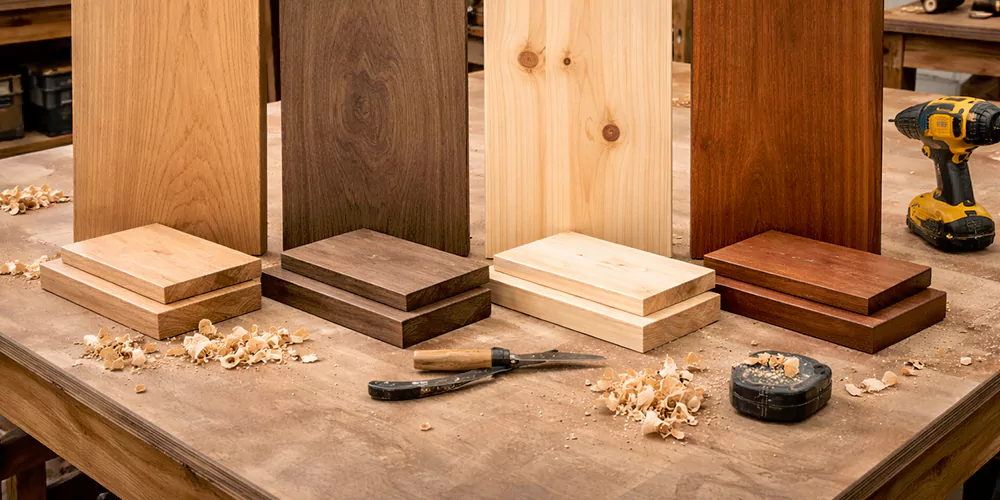
The species of wood you select affects everything from appearance to maintenance requirements. Here’s what you should know about common options.
Oak dominates the wood interior door market in Central Florida. Both red oak and white oak offer excellent durability and distinctive grain patterns that many homeowners love.
Red oak provides warm, reddish-brown tones with prominent, flowing grain. It's softer than white oak, making it easier to work with for custom details or modifications. The open grain structure accepts stain readily, allowing for dark walnut finishes or lighter natural tones.
White oak delivers slightly cooler, grayer tones with tighter, more uniform grain. It's harder and more moisture-resistant than red oak, which matters in humid climates. White oak has become particularly popular for modern and contemporary interiors where its subtle character doesn't compete with minimalist design elements.
Maple ranks among the hardest domestic woods commonly used for doors. This translates to excellent durability and dent resistance, making maple doors ideal for high-traffic areas or homes with active families and pets.
The wood's fine, consistent grain creates a smooth, almost refined appearance. Natural maple ranges from nearly white to light reddish-brown tones. It accepts clear finishes beautifully but can be challenging to stain evenly due to its dense grain structure. Many prefer painted finishes on maple, where its smooth surface creates a flawless appearance.
Modern wood interior doors often use maple specifically because its subtle grain pattern doesn't distract from clean, contemporary forms.
Cherry brings richness and elegance that few other woods can match. Its fine grain and natural reddish-brown color deepen beautifully over time as the wood oxidizes and develops a warm patina.
The wood works easily and finishes to a satin-smooth surface. Cherry's stability makes it reliable in varying humidity conditions, though it's pricier than oak or maple alternatives. This premium positioning makes sense for primary suites, formal spaces, or homes where interior finishes lean toward the high end.
One characteristic worth knowing: cherry wood darkens significantly over its first few years, particularly when exposed to sunlight. This natural aging enhances the wood's beauty, but you'll want to finish all cherry elements in a space simultaneously so they age together consistently.
Pine offers an accessible entry point for natural wood interior doors. Its lighter weight, softer texture, and lower cost make it attractive for budget-conscious projects or spaces where heavy traffic isn't a concern.
The wood's prominent knots and grain variations create rustic character that works well in casual, country, or cottage-style interiors. Those same knots can be drawbacks in formal settings or where a refined appearance matters most.
Pine's softer nature makes it more susceptible to dents and damage. Plan accordingly for its placement. Guest bedrooms, powder rooms, and closets make more sense than main traffic paths or children's rooms where door abuse tends to happen.
Interior mahogany wood doors represent the luxury tier. This tropical hardwood delivers stunning reddish-brown tones, fine grain, and exceptional workability. It resists warping, shrinking, and swelling better than most alternatives, making it particularly well-suited for Florida's climate challenges.
True mahogany comes at a premium price point that reflects both material costs and its performance characteristics. For high-end custom homes and luxury renovations, mahogany doors create statements that justify their investment. Less expensive "mahogany-stained" doors use domestic woods finished to approximate mahogany's color, delivering the look at lower cost.
Prehung vs. Slab Doors
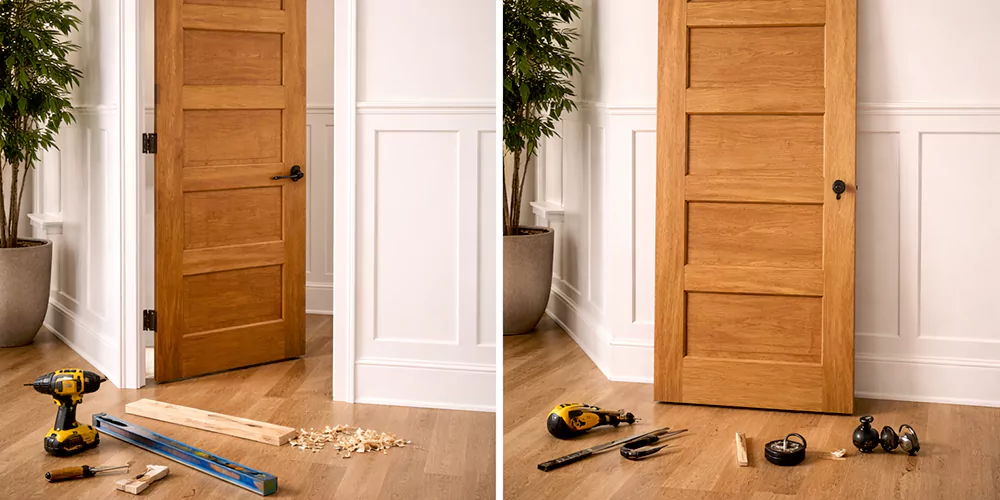
Deciding between prehung and slab configurations affects both installation costs and final results.
Prehung units arrive with the door already mounted in its frame, complete with hinges installed. The jamb includes the necessary stops and hardware preparation. Installation involves setting the entire unit into the rough opening, shimming it level and plumb, and securing it in place.
This configuration dramatically simplifies installation, particularly for new construction or complete door replacement projects. The door and frame dimensions are factory-matched, eliminating the need to precisely fit a slab to an existing frame. For contractors working on tight schedules, prehung doors save significant labor time.
Solid wood interior doors prehung packages typically include premium hinges rated for the door's weight, properly bored hardware prep, and sometimes even factory finishing. You're paying more upfront but reducing installation complexity and potential headaches.
The main limitation: prehung units only work when replacing entire door assemblies. If your existing frames are in good condition, buying prehung means discarding perfectly functional jambs.
Slab doors come as just the door panel itself, with no frame or hardware. You're responsible for fitting them to existing frames, boring holes for hardware, and mortising hinges. This requires more skill and tools but offers maximum flexibility.
For renovation projects where door frames remain serviceable, slabs make economic sense. You're only replacing the worn or dated door panel while preserving the existing frame and trim work. This approach works particularly well when updating door styles without major construction.
Wood interior doors with frame packages represent a middle ground. These include both door and frame but aren't preassembled. You hang the door in the frame yourself before installing the complete unit. This option suits experienced DIYers or contractors who want frame-door compatibility without factory assembly.
Selecting Wood Interior Doors for Central Florida Homes

Florida’s climate presents specific considerations that affect door selection and performance.
Central Florida's humidity levels fluctuate seasonally, with summer months reaching 75-90% relative humidity while winter drops to 55-65%. Wood responds to these changes by expanding and contracting. Understanding this helps you choose appropriate materials and finishes.
Solid wood doors move more than engineered alternatives. This doesn't make them a poor choice, but proper installation includes leaving appropriate clearance gaps and using quality finishing to seal all six sides of the door. Many problems attributed to "poor quality wood doors" actually stem from inadequate finishing or improper installation clearances.
Factory-finished doors arrive with professional-grade sealers already applied. This represents money well spent for Florida applications. Field-applied finishes rarely achieve the same moisture resistance unless you're working with an experienced finisher who understands proper technique.
Contemporary interior wood doors with engineered cores handle humidity fluctuations better than solid wood, making them worth considering for spaces with inconsistent climate control or high moisture exposure.
Most Central Florida locations follow the Florida Building Code 8th Edition. Interior doors typically face minimal code requirements compared to exterior applications, but there are situations where fire ratings, accessibility standards, or other specifications come into play.
Fire-rated doors become necessary for certain commercial applications, multi-family buildings, or residential garages attached to living spaces. These doors use specific core construction and hardware to meet fire resistance ratings, typically 20 minutes to 90 minutes depending on application.
The FBC doesn't require impact resistance for interior doors, but if you're replacing an interior door that also serves as an exterior entry (like a garage entry), verify whether impact ratings or enhanced security features apply to that specific opening.
Florida's architectural diversity spans Spanish Mediterranean, Contemporary, Craftsman, Colonial Revival, and Modern styles. Your door selection should harmonize with your home's overall character.
Traditional panel doors with rich wood tones and stained finishes complement Spanish Mediterranean and Colonial Revival homes. Painted finishes often work better than stained for Contemporary and Modern spaces, where you might choose flush or minimal-panel designs.
Craftsman-style interiors call for doors with substantial proportions, visible wood grain, and authentic details. Beadboard inset panels or Arts and Crafts hardware complete the look.
The door trim and molding choices around your doors matter just as much as the doors themselves for creating cohesive design. Simple casing profiles work with modern doors while more elaborate trim complements traditional panel doors.
Installation Considerations and Costs

Understanding installation requirements helps you budget accurately and avoid surprises.
Installing wood interior doors requires moderate carpentry skills, particularly for prehung units. The job involves precise measurement, level and plumb adjustments, proper shimming, and secure fastening. Most DIY-capable homeowners can handle this with appropriate tools and patience.
That said, professional installation typically runs $150-$300 per door for standard applications. This includes removal and disposal of existing doors, installation of new units, and basic trim work. The cost justification comes from speed, precision, and warranty protection. Pros can install doors that operate smoothly, close properly, and look clean, while avoiding common rookie mistakes that lead to binding or gaps.
Complex installations involving custom sizes, special hardware, or challenging accessibility add to labor costs. French doors or double door installations require careful coordination between paired units, making professional installation worth considering even for skilled DIYers.
Successful door installation starts with proper rough opening preparation. The opening must be square, level, and plumb with adequate structural support. Header beams need appropriate sizing for the opening width. These fundamentals matter more than any other aspect of the installation.
For replacement doors, thoroughly inspect existing frames for rot, damage, or structural issues. Sometimes door problems stem from frame deterioration rather than door failure. Addressing underlying issues prevents recurring problems.
Hardware boring and hinge mortising must be precise for proper door function. Standard measurements exist for residential doors, but verify specifications with your manufacturer's templates. Many prehung solid wood interior doors arrive with hardware preparation already completed correctly.
Pricing varies significantly based on construction type, wood species, size, and features. Here's what to expect in Central Florida:
Hollow Core Doors: $50-$150 per slab. These represent the budget tier, suitable for closets and secondary spaces.
Solid Core Doors: $150-$400 per slab. This middle category delivers most of the benefits of solid wood at moderate pricing.
Solid Wood Doors: $300-$800+ per slab. Premium materials and construction justify higher prices. Exotic woods or custom designs push costs higher.
Prehung Packages: Add $100-$200 to slab prices. You're paying for frame materials, factory assembly, and hardware prep.
French Doors: $600-$2,000+ per pair. Glass quality, true divided lites versus simulated, and overall construction quality drive pricing variations.
Installation Labor: $150-$300 per door for professional installation. Complex configurations or accessibility challenges increase labor costs.
These figures represent typical retail pricing for quality products from established manufacturers. Volume pricing for new construction or multi-unit renovations can substantially reduce per-door costs.
Hardware and Finishing Options
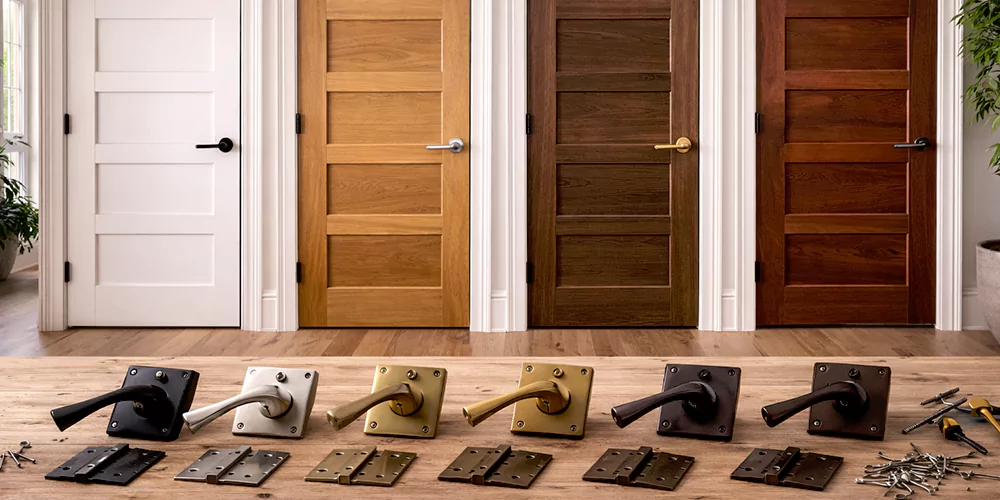
The hardware and finishes you select complete the door’s appearance and function.
Interior door hardware ranges from basic passage sets (no lock function) to privacy sets (locking from one side) to dummy knobs for non-latching applications like closets.
Style choices span traditional, contemporary, and transitional designs in various finishes. Matte black has dominated recent trends in Florida, working well across multiple design styles. Brushed nickel and satin brass remain popular classics. Oil-rubbed bronze fits traditional and rustic interiors beautifully.
Quality matters more than many realize. Budget hardware feels loose and operates roughly within months. Mid-range brands from established manufacturers deliver solid performance and longevity at reasonable prices. Premium options provide refined operation and distinctive designs that justify their costs in high-end applications.
Match your hardware finish throughout visible areas for design cohesion. Mixing finishes intentionally can work, but requires careful planning to avoid looking haphazard.
Natural wood interior doors offer three primary finishing approaches:
Clear Finishes showcase the wood's natural grain and color. Polyurethane, lacquer, or conversion varnish products provide protection while maintaining transparency. This approach works beautifully with species like oak, cherry, or mahogany where the wood itself provides visual interest.
Stained Finishes modify the wood's color while preserving grain visibility. Options range from light honey tones to nearly black ebony finishes. Quality staining requires skill for even application and color consistency, making factory finishing worth considering.
Painted Finishes cover the wood grain completely, creating smooth, uniform surfaces. White remains overwhelmingly popular, but grays, blues, greens, and even black create striking effects in the right settings. Paint-grade wood or MDF doors often make more sense economically than painting premium solid wood.
Florida's humidity makes proper finishing crucial for long-term door performance. Six-sided sealing (both faces, four edges, and top/bottom) prevents moisture absorption and related movement issues.
Maintenance and Longevity
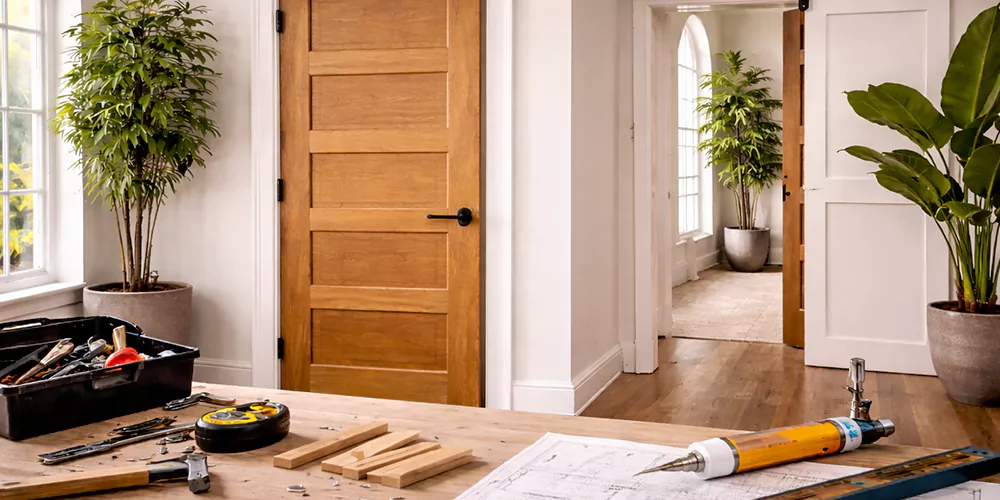
Proper care extends the lifespan of your wood interior doors and preserves their appearance.
Wood interior doors require minimal maintenance compared to exterior applications. Regular cleaning with a slightly damp cloth removes dust and fingerprints. Avoid excessive water or harsh chemicals that might damage finishes.
Hinges benefit from occasional lubrication with silicone spray or similar products. This prevents squeaking and ensures smooth operation. Tighten hinge screws periodically, as normal door operation can gradually loosen them.
For stained or clear-finished doors, inspect the finish annually for wear at high-touch points like around hardware. Light abrasion and recoating of affected areas prevents more extensive refinishing needs later.
Painted doors may show scuffs or marks over time. Touch-up paint applied carefully to affected spots maintains appearance between complete repainting cycles.
Florida's seasonal humidity changes cause wood doors to expand slightly in summer and contract in winter. This normal movement means doors that close easily in winter might stick slightly in August. Small adjustments to hinges or strikes typically solve these seasonal issues.
If a door consistently binds or fails to latch, investigate before forcing it. The problem might be loose hinges, settling foundation, or moisture-related swelling. Addressing root causes prevents damage to the door or frame.
Wood doors in particularly humid spaces like bathrooms near showers benefit from enhanced ventilation. Exhaust fans that actually get used prevent moisture accumulation that accelerates wear on wood products.
Minor damage like small dents, scratches, or worn finishes can often be repaired at reasonable cost. Wood filler, light sanding, and refinishing restore many damaged doors to excellent condition.
Extensive damage, warping, or deteriorating hollow-core construction usually justifies replacement rather than repair. Similarly, if door style no longer matches your home's aesthetic following renovation, replacement makes more sense than trying to modify existing doors.
Working with a Florida Door Supplier
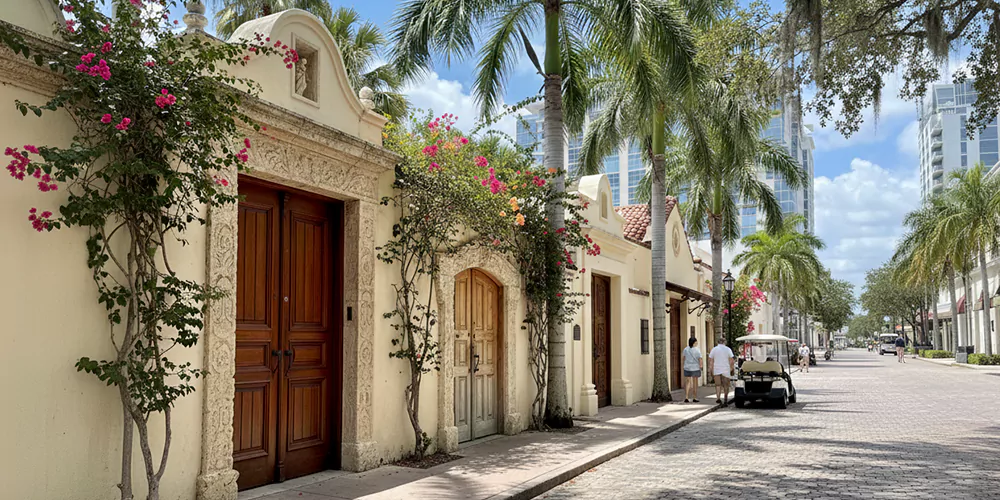
Choosing the right supplier affects both product quality and project success.
Established suppliers maintain relationships with quality manufacturers, offer professional advice, and stand behind their products. Look for companies with physical locations you can visit, not just online retailers. Seeing doors in person before purchasing helps you make informed decisions about appearance and quality.
Product knowledge among staff matters significantly. Can they explain the differences between construction types? Do they understand Florida's climate considerations? Can they recommend appropriate options for your specific application?
Titan Florida Doors specializes in serving Central Florida's residential and commercial markets with quality door products and expertise specific to our region's needs. Our team understands local building codes, climate considerations, and design trends that matter for Orlando-area projects.
Before purchasing, verify several key points:
- What's the warranty coverage and duration?
- Are doors available in stock or custom order only?
- What's the expected lead time for delivery?
- Do they offer installation services or contractor referrals?
- What return or exchange policies apply if doors arrive damaged or incorrect?
- Can they provide samples or references from similar projects?
For large projects or new construction, discuss volume pricing and coordination with your construction schedule. Many suppliers offer significant discounts for multiple doors purchased together.
Stock doors from major manufacturers provide excellent quality at competitive prices with shorter lead times. Standard sizes (typically 24", 28", 30", 32", 36" widths in 80" or 96" heights) cover most residential applications.
Custom doors make sense when standard sizes don't fit, you want specific design details, or you're matching historical or unique architectural elements. Expect longer lead times (often 6-8 weeks) and higher costs, but you'll get exactly what your project needs.
The door molding and trim options around your doors allow considerable customization even with stock door slabs, letting you create distinctive looks without full custom door orders.
Making Your Selection
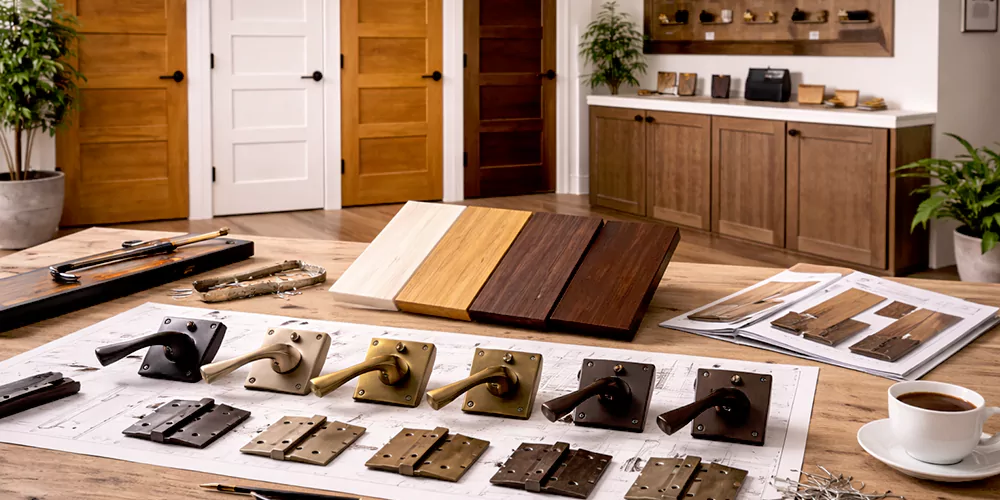
With all this information, how do you actually choose the right wood interior doors for your Central Florida project?
Establish realistic budget expectations including both materials and installation. For a typical three-bedroom home replacing all interior doors, expect $3,000-$8,000 depending on quality level and whether you choose solid core versus solid wood construction.
Prioritize spending on high-visibility and high-use doors first. Primary bedroom, main bathroom, and entries to formal spaces deserve higher-quality doors than spare bedroom closets or utility rooms.
Stock doors ship within days or weeks. Custom orders require longer planning. For renovation projects, order doors early in the process so they're available when needed for installation. Delays waiting for doors can stall entire project timelines.
For new construction, coordinate door selection with your broader trim and finish decisions. Doors, trim, and exterior door frames all need to work together cohesively.
Quality interior doors last decades when properly maintained. Choosing slightly better materials or construction often pays dividends in longevity and daily enjoyment. That extra $200 per door spread over 20+ years represents minimal annual cost while delivering better performance throughout.
Style trends shift, but well-crafted traditional or transitional door designs remain appealing across decades. Extremely trendy or unique design choices might look dated sooner than classic approaches.
Frequently Asked Questions
Solid wood doors are constructed entirely from natural wood throughout, while solid core doors use engineered wood or composite materials in the core with wood veneer faces. Both deliver substantial weight and quality feel, but solid wood costs more and shows natural wood character on all edges. Solid core doors offer better dimensional stability in humid climates like Central Florida and resist warping more effectively. For most residential applications, quality solid core doors perform excellently while costing $100-$300 less per door than comparable solid wood options. The choice often comes down to budget, desired aesthetics, and whether you plan to stain edges or keep them painted.
Yes, proper finishing makes a significant difference in Florida. All six sides of the door (both faces, four edges, and top/bottom) should be sealed to prevent moisture absorption and related expansion issues. Factory-finished doors typically arrive with professional-grade sealers already applied, which proves valuable in our climate. Solid core doors with engineered cores handle humidity fluctuations better than solid wood, making them worth considering for spaces with inconsistent climate control. Regular seasonal adjustments to hinges or strikes help accommodate normal wood movement as humidity levels change between winter and summer months. Adequate ventilation in moisture-prone spaces like bathrooms extends door life significantly.
For new construction or complete door replacement projects, prehung doors deliver excellent value despite costing $100-$200 more than slabs alone. The door arrives already hung in its frame with hinges installed and hardware prepared, dramatically simplifying installation and reducing labor costs. This factory assembly ensures perfect fit between door and frame, eliminating fitment issues that sometimes occur with field-hung doors. For renovation projects where existing frames remain in good condition, slab doors make more sense economically since you're only replacing the door panel itself. Prehung units work best when you're removing and replacing the entire door assembly including jambs and casing.
Oak, maple, and engineered wood products with quality veneers all perform well in Central Florida's climate. White oak offers slightly better moisture resistance than red oak due to its tighter grain structure, while maple's hardness provides excellent durability for high-traffic areas. For solid wood doors, proper finishing matters more than species selection for humidity resistance. Cherry and mahogany deliver premium aesthetics with excellent stability but come at higher price points. Pine works fine for lower-traffic areas but its softer nature makes it more susceptible to dents and damage. Consider your budget, desired appearance, and specific application when selecting species. Many Florida homeowners choose solid core doors with oak or maple veneers, achieving solid wood aesthetics with better dimensional stability.
Budget $200-$500 per door including materials for quality solid core options, or $400-$800+ per door for solid wood construction. These figures include prehung frames but not installation labor, which typically runs $150-$300 per door. For a standard three-bedroom, two-bath home replacing eight to ten interior doors, total project costs range from $3,000-$8,000 depending on material quality and whether you DIY installation or hire professionals. Custom sizes, exotic woods, or special features like French doors increase costs. Hollow-core doors for closets and secondary spaces cost considerably less at $50-$150 per slab. Most homeowners find the best value in mid-range solid core prehung doors from established manufacturers, which deliver excellent performance without premium material costs.
Both painted and stained finishes work well for wood interior doors depending on your design goals and the door construction. Solid wood doors accept both stains and paint beautifully, with staining showcasing the natural wood grain. Paint-grade doors or MDF options make more economic sense if you plan to paint, since you're covering the wood grain anyway. In Florida's current design trends, painted white or gray doors dominate contemporary and transitional spaces, while stained doors remain popular for traditional and craftsman-style homes. Paint provides the most uniform appearance and hides any minor imperfections or repairs better than stain. If you're painting, proper surface preparation including filling, sanding, and priming determines the final result quality. Factory finishing typically delivers better results than field finishing for both paint and stain applications.
Most interior doors in residential applications face minimal Florida Building Code requirements beyond basic safety standards. The FBC primarily focuses on exterior doors regarding impact resistance and wind load ratings. However, certain interior applications do require special attention: doors between attached garages and living spaces often need fire ratings, doors in commercial or multi-family buildings may require fire ratings and accessibility compliance, and any interior door also serving as an exterior entry point needs appropriate weather and impact resistance. For standard interior doors in single-family homes throughout Central Florida, you're free to select based on aesthetics, quality, and budget rather than specific code mandates. If you're working on commercial projects or multi-family construction, verify specific requirements with your local building department or design professional.
Ready to Select Your Wood Interior Doors?
Ready to explore wood interior door options for your project? Titan Florida Doors serves Central Florida with quality products and expert guidance tailored to our region’s unique needs.
- Residential projects: Get your residential door quote
- Commercial applications: Request a commercial bid
- Questions about your specific needs? Contact our team for personalized assistance
