

Introduction
When planning a door installation or replacement project, the exterior door frame is just as critical as the door itself. Your frame provides structural support, weather resistance, and security while ensuring proper operation for years to come. Whether you’re sourcing an exterior door frame kit for new construction or replacing an existing exterior door and frame, understanding your options helps you make informed decisions that protect your property and
investment.
Florida’s hurricane exposure and strict building code requirements make exterior door frame selection particularly important. Throughout Central Florida, including the Orlando metro area, the right frame system must withstand high winds, meet impact-resistance standards, and maintain structural integrity over years of exposure to heat, humidity, and severe weather events. Understanding the Florida Building Code requirements for your specific region ensures your door and frame installation meets current safety standards.
Understanding Exterior Door Frame Systems
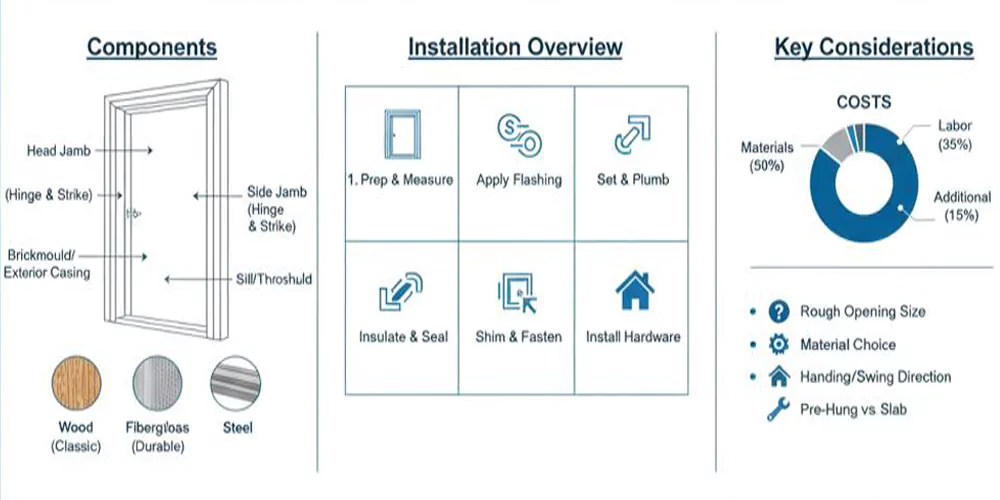
An exterior door frame (also called a door jamb or door surround) consists of the vertical side jambs, horizontal head jamb, and threshold that create the structural opening for your door. This assembly must bear the door’s weight, provide anchor points for hinges and strike plates, and make a weathertight seal against the elements.
Modern exterior door frames come in several material options, each with distinct performance characteristics. Steel and hollow metal frames dominate the commercial market due to their superior strength, fire resistance, and security performance. These frames can withstand the punishment of high-traffic environments while meeting rigorous fire-rating requirements for commercial buildings.
Wood frames remain popular for residential applications, offering traditional aesthetics and easier modification during installation. However, wood frames require regular maintenance and struggle with moisture resistance in Florida’s humid climate. Fiberglass and composite frames have gained market share in coastal regions, combining wood’s workability with enhanced weather resistance and dimensional stability.
Pre-hung door systems that include an exterior door with a frame offer the most reliable installation approach. These factory-assembled units ensure proper alignment between the door and frame, include all necessary hardware, and simplify installation while reducing the risk of air leakage and water infiltration.
Material Options for Florida Applications
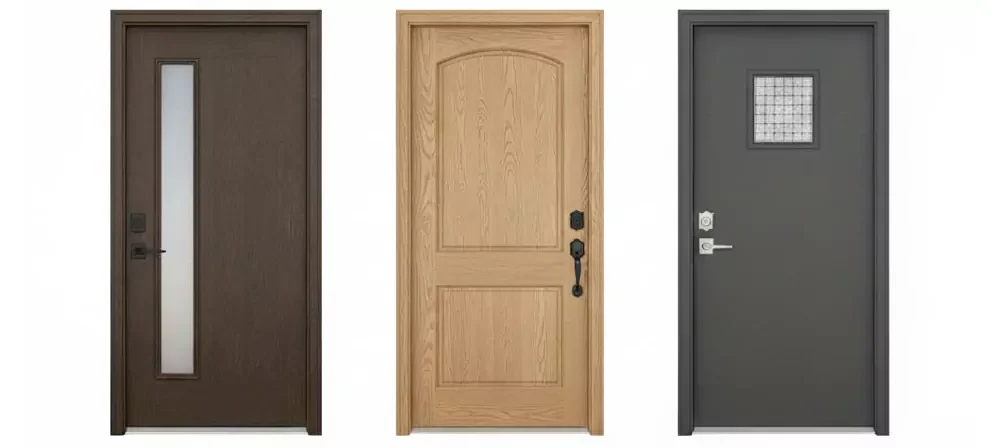
Steel door frames provide unmatched strength and security for commercial applications. These frames support heavy doors without sagging, accept commercial-grade hardware, and meet fire-rating requirements up to three hours, depending on construction. Hollow metal frames use 16 to 20-gauge steel with reinforced areas around hardware locations.
For Florida installations, steel frames require appropriate corrosion protection. Galvanized steel with powder-coated finishes resists moisture and humidity exposure, while stainless steel frames offer maximum corrosion resistance in coastal environments. Correctly specified steel frames can last decades in Florida's climate when paired with quality finishes and regular maintenance.
Steel frames excel in commercial door installations where security, durability, and fire resistance take priority over aesthetics. Schools, office buildings, warehouses, and industrial facilities rely on steel frame systems to meet building code requirements while providing long-term value through minimal maintenance and exceptional longevity.
Fiberglass frames have become increasingly popular throughout Florida residential construction. These frames resist moisture, won't rot or warp, and maintain dimensional stability through temperature and humidity changes. Fiberglass frames accept paint finishes and can mimic wood grain textures while outperforming wood in weather resistance.
Composite frames combine wood fibers with synthetic binders and protective coatings. These engineered products offer wood's familiar installation characteristics while resisting moisture damage and insect infestation. Many composite frames include foam insulation cores for improved thermal performance.
For Wind-Borne Debris Regions like Central Florida, fiberglass and composite frames can be engineered to meet hurricane impact door requirements when properly reinforced and installed. These frames work well with both impact-resistant doors and traditional doors protected by impact-resistant storm shutters that meet Florida Building Code standards.
While wood frames remain available, they face significant challenges in Florida's climate. Moisture infiltration causes swelling, warping, and eventual rot in untreated wood. Even pressure-treated lumber designed for ground contact can deteriorate when exposed to Florida's combination of heat, humidity, and intense UV radiation.
If you choose wood frames, select rot-resistant species like cypress, cedar, or treated pine. Apply high-quality exterior primer and paint immediately after installation, and maintain protective coatings through regular repainting. Monitor wood frames annually for signs of moisture damage, paint failure, or insect activity.
Exterior Door Frame Kit Advantages
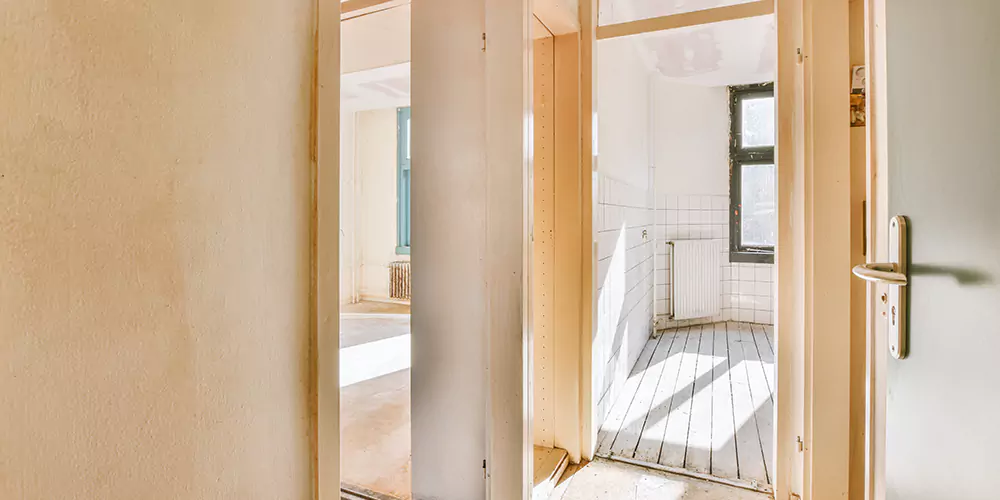
An exterior door frame kit provides all necessary components for a complete frame assembly. These kits include pre-cut jambs, threshold, brick mold or casing trim, shims, and installation hardware. Some kits include pre-installed weatherstripping and mounting brackets.
Pre-cut frame kits eliminate measurement errors and reduce installation time. The components arrive ready to assemble with precise miter cuts and pre-drilled screw holes. This consistency ensures square, plumb frames that support proper door operation.
For contractors managing multiple projects, frame kits standardize material specifications and simplify ordering. Instead of sourcing individual components from various suppliers, you receive everything needed from a single source. This streamlines logistics and reduces the risk of missing parts, which can delay installation.
Quality frame kits designed for Florida construction include appropriate corrosion-resistant fasteners, marine-grade sealants, and materials rated for coastal exposure. These specifications prevent premature failure from saltwater corrosion and moisture intrusion.
Installation Requirements and Best Practices
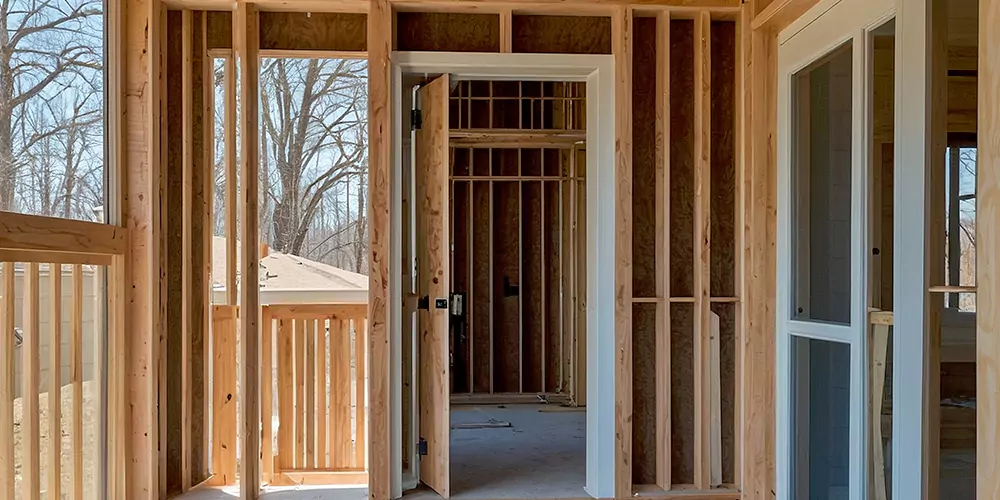
Proper frame installation directly impacts door performance and longevity. The rough opening must provide adequate space for shimming and adjustment while maintaining structural support. Standard practice allows 1/2 inch clearance around the frame perimeter for adjustment and insulation.
Begin by verifying the rough opening is square, plumb, and level. Correct any issues before frame installation, as attempting to compensate for out-of-square openings with excessive shimming compromises frame strength and door operation. Use a 6-foot level for accuracy on tall openings.
Set the frame in the opening and insert shims at the hinge locations, the strike plate position, and at intervals along the head and side jambs. Check that the side jambs remain straight and plumb, then secure the frame to the structural framing members with appropriate fasteners. Never rely solely on fasteners driven into drywall or exterior sheathing.
Apply continuous beads of exterior-grade sealant at the threshold and between the frame and rough opening. Install head flashing properly lapped over the frame to direct water away from the opening. In Florida’s Wind-Borne Debris Regions, follow enhanced fastening schedules and anchoring requirements specified in product installation instructions to maintain Florida Product Approval compliance.
Apply continuous beads of exterior-grade sealant at the threshold and between the frame and rough opening. Install head flashing properly lapped over the frame to direct water away from the opening. In Florida’s Wind-Borne Debris Regions, follow enhanced fastening schedules and anchoring requirements specified in product installation instructions to maintain Florida Product Approval compliance.
Labor Cost to Remove and Install Exterior Door and Frame

The labor cost to remove and install an exterior door and frame varies based on several factors, including door size, material selection, site conditions, and local labor rates. Understanding these cost drivers helps you budget accurately and evaluate contractor proposals.
Removing an existing exterior door and frame typically costs $100 to $300, depending on complexity. Standard door removals on wood or metal frames take 1-2 hours. Costs increase when removing heavily caulked or sealed units, doors with extensive rot requiring frame demolition, or installations involving structural repairs to the rough opening.
Disposal fees range from $50 to $150, depending on your location and material type. Some contractors include disposal in their base price, while others itemize it separately. Ask about disposal handling when comparing quotes to ensure an accurate cost comparison.
Professional installation of a standard exterior door with frame costs $200 to $600 in labor. This assumes a pre-hung door unit with minimal rough opening preparation. The range accounts for door size, material weight, and installation complexity.
Impact-rated door systems and commercial steel frames require specialized installation knowledge and additional time. These installations cost $400 to $1,000 in labor due to precise anchoring requirements, heavy materials requiring additional workers, and detailed sealing and flashing procedures necessary for Florida Building Code compliance and warranty coverage.
Structural repairs to damaged framing range from $200 to $800, depending on the extent of damage. Rot repair, header reinforcement, or stud replacement increases project costs but ensures proper support for your new door system.
Custom frame fabrication for non-standard openings costs more than stock sizes. Expect a 20-40% premium for custom steel frames or specialty materials. Lead times also extend for custom fabrication, sometimes by several weeks during busy construction seasons.
Multi-point locking systems, electronic access control integration, and specialty hardware add $150- $500 to installation costs. These features require precise installation and often involve electrical work best handled during the initial installation rather than as an afterthought.
Matching Frames to Door Types
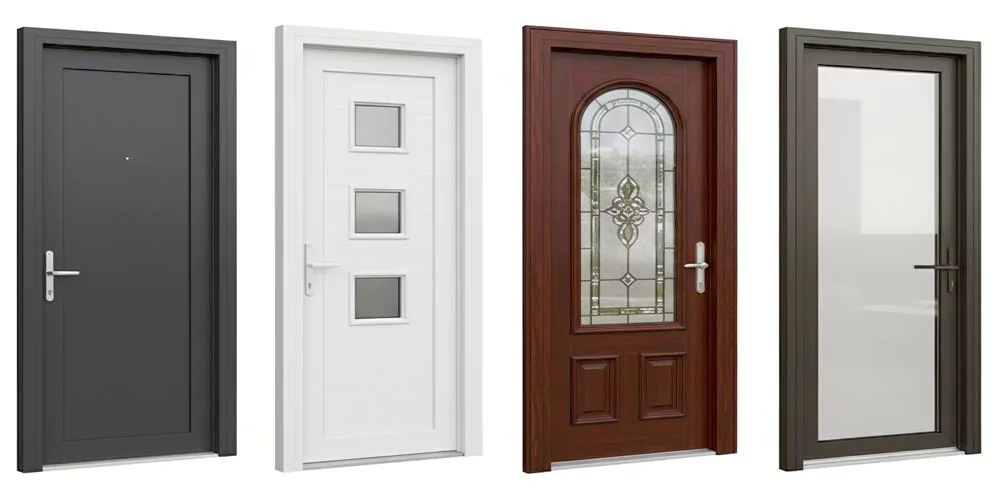
Your exterior door and frame must work as an integrated system. Door weight, operation style, and performance requirements all influence appropriate frame selection.
Heavy solid-core or steel doors require robust frames that won’t sag under continuous use. Commercial hollow metal frames provide the strength needed for doors exceeding 100 pounds. Residential solid-wood doors require properly reinforced wood frames or metal frame systems.
Pivot doors and other specialty operation styles have specific frame requirements. Pivot hardware transfers door weight through floor and header-mounted pivot points rather than traditional side hinges, requiring frames designed to accommodate these unique load paths.
For maximum security, pair high-security doors with matching frame systems. Commercial-grade hollow metal frames with continuous welded corners and reinforced strike plates complement high-security locksets and access control systems. Half measures leave weak points that compromise overall security performance.
Florida Building Code and Regional Requirements
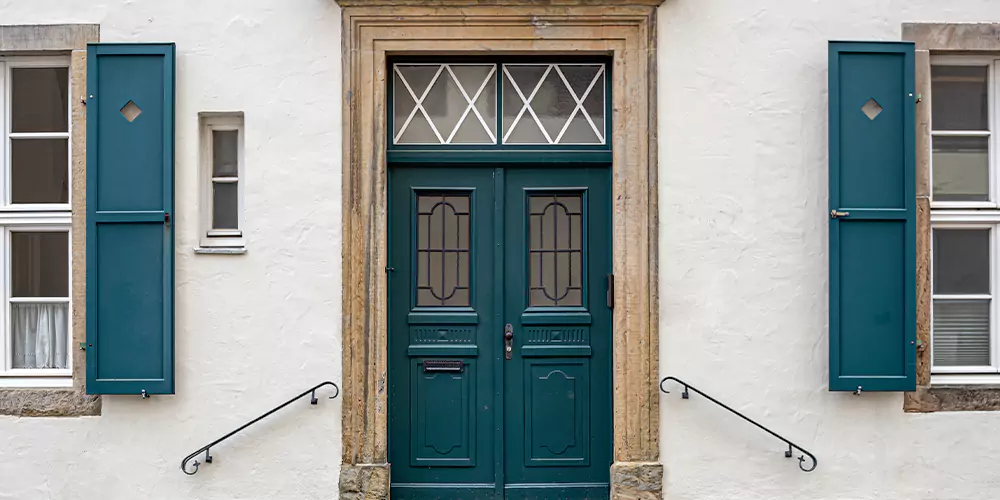
The Florida Building Code establishes performance standards for exterior doors and frames based on location and wind-borne debris exposure. The 8th Edition (2023) applies throughout the state, with specific requirements varying by region.
Central Florida, including Orlando and the surrounding Orange County areas, falls within a Wind-Borne Debris Region where impact resistance is mandatory. While not classified as a High-Velocity Hurricane Zone like Miami-Dade and Broward counties, these areas still require substantial wind and impact protection.
All exterior doors in Wind-Borne Debris Regions must be impact-resistant or protected by impact-resistant coverings such as storm shutters that meet FBC standards. This requirement applies to residential and commercial buildings throughout the Orlando metro area and most of Central Florida.
When selecting door and frame systems for Central Florida applications, look for products with a Florida Product Approval (FLPA) number. These products have been certified for use in wind-borne debris regions outside the HVHZ and meet appropriate wind speed and impact resistance standards for the area.
Miami-Dade Notice of Acceptance (NOA) approved products represent a stricter standard and are valid statewide. While NOA approval exceeds requirements for most Central Florida applications, these products provide additional assurance of performance and can simplify specifications when working on projects across multiple Florida regions.
Frame installation in wind-borne debris regions follows enhanced fastening schedules compared to standard residential construction. The Florida Building Code requires appropriate anchoring to resist design wind loads, typically meaning fasteners every 12 inches through the frame into structural members, rather than the 16-inch spacing used in non-wind regions.
Hurricane-rated door and frame systems include specific installation instructions that must be followed to maintain product approval and warranty coverage. These instructions detail required fastener types, spacing, and anchoring methods appropriate to the product's tested performance.
When replacing doors in existing Central Florida construction, many jurisdictions require that the entire door system be brought up to current FBC standards. This means replacing non-compliant frames even if you only intended to replace the door, and ensuring the new system provides the required impact resistance either through impact-rated door construction or approved protective coverings.
Work with experienced contractors familiar with Florida Building Code requirements and local permitting processes. Proper documentation of product approvals and installation compliance prevents costly delays during permitting and final inspection.
Selecting the Right Supplier

Finding a knowledgeable door and frame supplier makes the difference between a successful project and ongoing problems. Look for suppliers who understand Florida’s unique requirements and can provide appropriate product specifications for your specific application.
The best suppliers maintain relationships with multiple manufacturers, giving them access to diverse product lines and the ability to source exactly what your project needs. This flexibility proves invaluable when projects require specialty items or need to meet specific performance criteria.
Technical support separates exceptional suppliers from order-takers. Your supplier should help you interpret building code requirements, select appropriate products for specific applications, and provide installation guidance. This expertise prevents costly mistakes and ensures your door systems perform as intended.
For commercial projects, ask about submittal preparation services, product literature for specifications, and familiarity with procurement processes used by general contractors and facility managers. Efficient communication and documentation streamline the specification and approval process.
Maintenance and Longevity

Proper maintenance extends frame service life and prevents minor issues from becoming major problems. Establish inspection and maintenance schedules appropriate to your frame material and exposure conditions.
Steel frames need annual inspections for coating damage, rust formation, and corrosion at fastener locations. Address coating failures immediately by cleaning affected areas, applying primer, and touching up finish paint. Humid environments benefit from more frequent inspections, particularly after storm events.
Wood frames require the most intensive maintenance. Inspect painted surfaces annually and repaint every 3-5 years, or sooner if coating failure appears. Check caulking and sealant annually and replace deteriorated material before moisture infiltration occurs. Monitor for wood rot, especially at the threshold and the bottom of the side jambs, where water tends to collect.
Lubricate hinges and moving hardware annually. Verify weatherstripping remains effective and replace worn sections. Check that the door operates smoothly, without binding or requiring excessive force to close. These simple maintenance tasks prevent accelerated wear and ensure continued performance.
Making the Decision
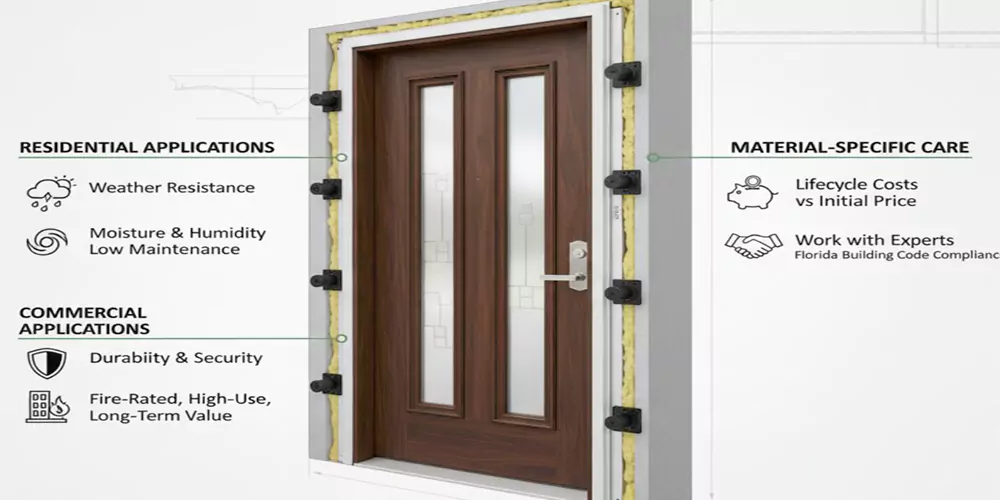
Choosing the right exterior door frame involves balancing multiple factors: budget, performance requirements, aesthetic preferences, and maintenance considerations. Take time to evaluate your specific needs rather than defaulting to the least expensive option.
Consider total lifecycle costs rather than just initial purchase price. A quality frame system costs more upfront but delivers lower maintenance requirements and longer service life. Over 20-30 years, a premium frame often costs less than multiple replacements of budget systems.
For residential applications, prioritize weather resistance and ease of maintenance. Central Florida homeowners benefit from materials that resist moisture and humidity, require minimal upkeep, and withstand severe weather without constant attention. Impact-rated systems or approved protective coverings ensure compliance with Wind-Borne Debris Region requirements.
Commercial property managers should emphasize durability, security, and life-safety compliance. Steel frames that meet fire-rating requirements, support high-security hardware, and tolerate heavy use provide the best long-term value despite higher initial costs.
Work with experienced professionals who understand both product capabilities and Florida Building Code requirements. Whether you’re a homeowner planning a residential door replacement or a contractor managing a commercial project, expert guidance ensures you select and install frame systems that deliver lasting performance and meet the current FBC standards for your region.
Frequently Asked Questions
A door jamb refers explicitly to the vertical side pieces of a frame, while the door frame includes the complete assembly of side jambs, head jamb (top horizontal piece), and threshold. The terms are often used interchangeably in casual conversation, but technically, the jamb is a component of the complete frame system. When ordering materials, the frame typically includes all components needed to create the door opening.
You can replace just the door if the existing frame is square, plumb, structurally sound, and adequately sized for the new door. However, many door replacements work better as complete door-and-frame units. Pre-hung systems ensure proper fit and operation while meeting current weatherproofing and energy code requirements. If your existing frame shows signs of rot, rust, or structural damage, replacing the entire system prevents future problems.
A standard pre-hung exterior door with frame takes experienced professionals 3-5 hours to install, including removal of the old door, preparation of the rough opening, installation of the new unit, and final trimming. Complex installations involving structural repairs, hurricane-rated systems, or specialty doors may require 6-8 hours or more. Custom steel frame fabrication and installation in commercial applications typically takes longer due to the material's weight and the need for precise anchoring.
Most Florida jurisdictions require building permits for exterior door replacements, particularly when replacing the entire door and frame assembly. Permits ensure work meets current Florida Building Code requirements, including wind pressure resistance and impact protection in Wind-Borne Debris Regions like Central Florida. In the Orlando area and throughout Orange County, permits verify that door systems comply with FBC 8th Edition standards. Some localities allow permit exemptions for like-for-like replacements that don't alter opening size, but it's best to verify requirements with your local building department before starting work.
Hollow metal frames provide superior strength to support heavy commercial doors, meet fire-rating requirements up to three hours, resist forced entry better than wood or fiberglass alternatives, and tolerate high-traffic use without warping or sagging. Steel frames accept commercial-grade hardware and access control systems, maintain tight tolerances through temperature changes, and can last 30-50 years with proper maintenance. These performance characteristics make hollow metal frames the standard for commercial buildings, schools, and institutional facilities.
Warning signs include visible rot or rust on frame components, gaps between the door and frame that allow light or air infiltration, difficulty closing or latching the door, water stains or moisture damage around the perimeter of the frame, loose or damaged trim that doesn't secure properly, and structural sagging that prevents proper door operation. If your frame exhibits multiple issues or extensive damage, complete replacement typically makes more sense than attempting repairs.
Fiberglass, composite, and properly treated steel frames perform best in Central Florida conditions. These materials resist moisture and humidity, maintain dimensional stability through temperature changes, and require minimal maintenance compared to wood alternatives. For commercial applications, galvanized steel hollow metal frames with high-quality powder-coated finishes provide excellent durability, meet fire-rating requirements, and withstand the challenges of Florida's climate. Residential installations benefit from fiberglass or composite systems that combine weather resistance with traditional aesthetics and easier installation than commercial steel frames. All materials should carry appropriate Florida Product Approval (FLPA) numbers or Miami-Dade NOA certifications to ensure compliance with Wind-Borne Debris Region requirements.
