

Introduction
When you’re standing in a home improvement store or browsing door options online, the sheer variety of wood types can feel overwhelming. Oak, maple, mahogany, pine… what’s the difference, and why does it matter? If you’re planning a door project or trim installation in Central Florida, understanding wood types isn’t just about aesthetics. It’s about choosing materials that will perform well in our climate, match your design vision, and stay within budget.
Let’s cut through the confusion and explore the most common types of wood you’ll encounter for doors, frames, and trim work.
Understanding Wood Types: Hardwood vs. Softwood
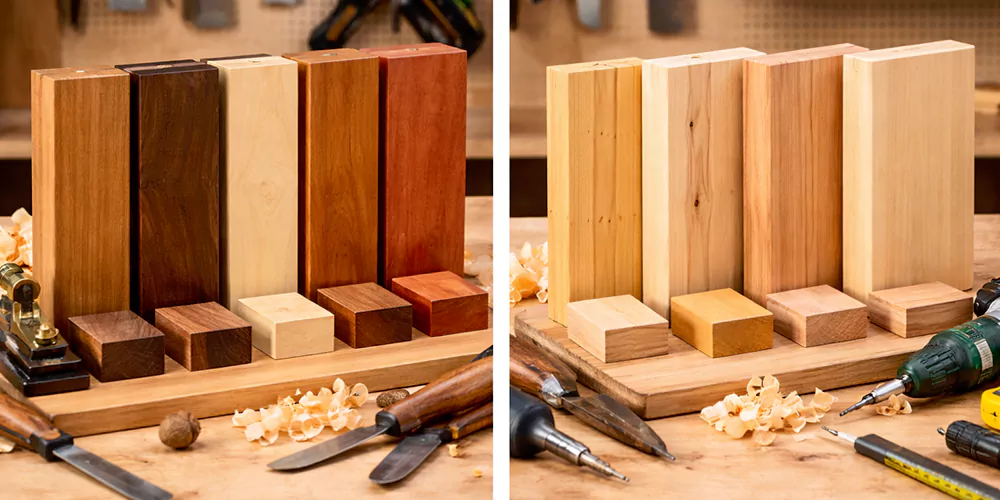
Before we dig into specific wood species, it’s helpful to understand the basic categories. Despite what the names suggest, hardwood and softwood don’t always describe the actual hardness of the wood.
Hardwoods come from deciduous trees (the ones that lose their leaves in fall). These woods typically have a tighter grain structure and greater density. Think oak, maple, cherry, and mahogany. Most hardwoods are durable and resist wear well, which is why they’re popular for doors, trim, and furniture that gets daily use.
Softwoods come from coniferous trees (evergreens with needles). Pine, fir, and cedar fall into this category. While they’re generally lighter and easier to work with, many softwoods still offer excellent performance for doors and trim, especially when properly finished and maintained.
In Central Florida, both hardwoods and softwoods have their place. The key is to match the wood type to your specific application and to understand how our humid climate affects different species.
Popular Hardwoods for Doors and Trim

Oak is probably the most recognizable wood type in American homes. You'll find it in everything from doors to cabinets to flooring. Red oak has a warm, slightly pinkish tone with a prominent grain pattern. White oak is more neutral in color with a tighter grain.
Both types are incredibly durable and take stain beautifully, which is why contractors love working with oak. For interior doors and trim, oak offers excellent value. It's widely available, reasonably priced compared to exotic hardwoods, and stands up to daily wear. The pronounced grain gives rooms character without being overwhelming.
One thing to know about oak in Florida: it's stable, but like all wood, it responds to humidity changes. Proper finishing and sealing are important, especially for exterior applications.
Maple is the go-to choice when you want a smooth, clean look. Hard maple (also called sugar maple) has an exceptionally fine, uniform grain that takes paint beautifully. This makes it perfect for painted doors and trim where you want a flawless finish.
The wood is dense and resists denting, which is why you'll often see it in high-traffic areas. Cabinet makers love maple because it machines cleanly and doesn't splinter easily during installation.
Soft maple is slightly less dense but still plenty durable for most door and trim applications. It's also more affordable than hard maple, making it a smart choice for budget-conscious projects without sacrificing quality.
Maple's light, neutral color works well in both traditional and modern designs. When you want wood that will blend seamlessly with various color schemes, maple delivers.
If oak is the reliable workhorse, cherry is the elegant show-stopper. This hardwood starts with a lighter, almost pinkish tone and deepens to a rich, reddish-brown over time. That aging process is part of cherry's appeal for many homeowners and designers.
The grain is fine and subtle, creating a smooth, sophisticated appearance. Cherry machines beautifully and takes finishes exceptionally well, though many people prefer to use clear finishes that highlight the wood's natural color evolution.
For doors, cherry offers moderate hardness that's more than adequate for interior applications. It's softer than oak or maple, which means it's slightly more prone to dents, but the trade-off is stunning visual appeal.
Cherry does come at a premium price point. If you're looking for that distinctive look on a tighter budget, you might consider cherry for focal point areas like your front door or main hallway trim, while using more economical woods elsewhere.
When people think luxury wood, mahogany often comes to mind. This wood has been prized for centuries for its rich, reddish-brown color, excellent workability, and natural resistance to moisture and rot.
True mahogany (Honduran mahogany) is becoming increasingly rare and expensive due to sustainability concerns. These days, you're more likely to encounter African mahogany or Philippine mahogany (which isn't technically true mahogany but offers similar characteristics).
For exterior doors in Florida, mahogany is an excellent choice. It holds up well in humid conditions and resists warping better than many other species. The wood is moderately soft, which makes it easy to work with for custom door designs and detailed trim work.
Mahogany accepts stain well, but many people prefer oil-based finishes that bring out the wood's natural depth and figure. When properly maintained, mahogany doors can last decades while developing a beautiful patina.
Walnut brings drama to any space. This dark, chocolate-brown wood has a straight grain with occasional irregular patterns that add visual interest. It's one of the most expensive domestic hardwoods, but for good reason.
The wood is moderately hard and works well for interior doors and trim where you want to make a statement. Walnut's natural color eliminates the need for staining. In fact, most people finish walnut with clear coats that protect the wood while showcasing its rich, natural tones.
One consideration: walnut can fade slightly when exposed to direct sunlight, so it's typically best reserved for interior applications or exterior doors with good overhang protection.
Here's a wood that doesn't get enough credit. Poplar is technically a hardwood, but it's one of the softer ones. It's also one of the most affordable hardwoods, which makes it incredibly popular for painted trim and doors.
The wood has a straight, uniform grain and minimal visible pores, which means it takes paint like a dream. Many professional painters actually prefer poplar to more expensive hardwoods when the final product will be painted anyway.
Poplar's natural color varies from cream to greenish-yellow with purple or dark streaks. Those color variations don't matter if you're painting, but they make poplar less desirable for stained applications.
For interior trim and painted doors in Central Florida, poplar offers excellent value. It's stable, easy to work with, and widely available at lumber yards and home centers.
Common Softwoods for Doors and Trim
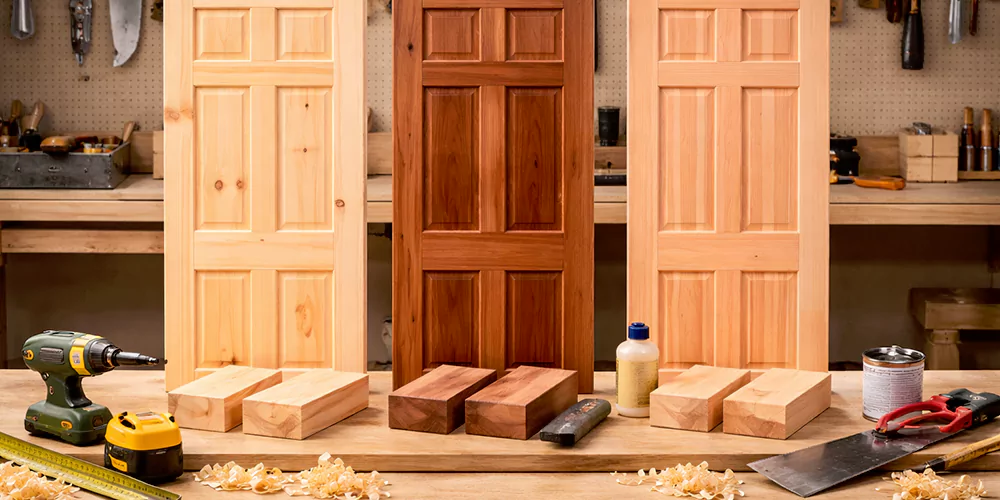
Pine is probably the most widely used softwood in construction. Southern yellow pine is denser and harder than its eastern cousin, while eastern white pine is softer and easier to work with.
For trim work, pine is budget-friendly and readily available. It accepts both paint and stain, though the wood's resinous nature means you'll want to use a good primer before painting. Pine has a distinctive grain pattern with knots that give it character. Clear pine (without knots) costs more but offers a cleaner appearance.
In Florida's climate, pine performs adequately for interior applications. For exterior doors, pine needs proper sealing and regular maintenance to prevent moisture problems. Many contractors recommend combining pine with synthetic materials for exterior trim to get the look of wood with better durability.
Douglas fir is stronger and denser than most softwoods, which explains its popularity in construction. The wood has a straight, attractive grain and ranges from light brown to reddish-brown in color.
For door frames and trim, Douglas fir offers good stability and strength at a moderate price point. It takes stain well, though the wood's natural variation means you'll see different absorption rates across the grain.
Douglas fir's natural resistance to decay makes it suitable for exterior applications in Florida, particularly for door frames where structural strength matters. Proper finishing still helps extend the wood's life in our humid climate.
Cedar deserves special mention for exterior applications. This aromatic softwood contains natural oils that resist moisture, decay, and insect damage. In Florida's humid climate, those characteristics are valuable.
Western red cedar has a distinctive reddish-brown color that weathers to an attractive silver-gray if left unfinished. Many people love that weathered look for exterior trim and doors. If you prefer to maintain the wood's original color, UV-resistant finishes are available.
Cedar is relatively soft, which means it dents more easily than hardwoods. But for exterior doors and trim where moisture resistance matters more than dent resistance, cedar is hard to beat. It's also naturally insulating, which can help with energy efficiency.
Wood Selection for Central Florida Climate

Living in Central Florida means dealing with heat, humidity, and occasional extreme weather. These conditions affect how different woods perform over time.
Moisture Movement: All wood expands and contracts with humidity changes. In Central Florida’s humid environment, choosing dimensionally stable species helps prevent problems. Oak, maple, and mahogany are good choices. Pine requires more careful finishing to manage moisture.
Rot Resistance: For exterior doors and trim, natural rot resistance matters. Cedar, mahogany, and certain treated woods handle moisture exposure better than others. Even naturally resistant woods benefit from proper sealing and maintenance in our climate.
Finishing Requirements: Florida’s intense sun and humidity mean finishes deteriorate faster than in drier climates. UV-resistant topcoats help protect wood from sun damage. Regular inspection and refinishing extend wood life significantly.
The Florida Building Code (currently the 8th Edition) includes provisions for exterior door construction in our Wind-Borne Debris Region. While the code doesn’t mandate specific wood types, it does require impact resistance for exterior openings. Many homeowners combine wood doors with impact-resistant glazing or protective coverings to meet code requirements.
For most Central Florida projects, focusing on proper installation, quality finishing, and regular maintenance matters more than the specific wood species. A well-maintained pine door can outlast a neglected mahogany one.
Wood Characteristics That Matter

When comparing different types of wood for your door or trim project, several characteristics beyond species name affect performance and appearance.
Grain Pattern: The grain is the pattern you see from the wood’s growth rings. Some woods like oak have very pronounced grain, while maple has a subtle, almost invisible grain. Pronounced grain adds visual texture. Subtle grain creates a smoother, more modern look. Neither is better, it depends on your design goals.
Color Range: Wood colors span from nearly white (like maple) to deep chocolate brown (like walnut). Remember that most woods darken slightly over time, especially cherry. If you’re staining wood, lighter base colors give you more flexibility.
Hardness Rating: The Janka hardness test measures how much force it takes to dent wood. Higher numbers mean harder, more dent-resistant wood. For high-traffic doors and trim, hardness over 1,000 on the Janka scale is ideal. Oak rates around 1,300, maple around 1,450, while pine is closer to 600-900 depending on the species.
Workability: Some woods cut, sand, and shape more easily than others. This affects both installation costs and the potential for custom details. Softer woods like pine and poplar work easily. Dense woods like hard maple require more time and sharper tools.
Stability: This refers to how much the wood moves with humidity changes. Stable woods like oak and mahogany cause fewer installation headaches and perform better long-term. Less stable woods need more careful installation and finishing.
Wood Finishes and Protection

The wood type you choose is only part of the equation. How you finish and protect that wood determines how it looks and performs over time.
Stains penetrate the wood to add color while showing the natural grain. Oil-based stains offer rich, even color. Water-based stains dry faster and have less odor. Different woods accept stain differently. Dense woods like maple can look blotchy if not properly conditioned before staining. Open-grained woods like oak soak up stain readily.
Clear Finishes protect wood without adding color. Polyurethane is durable and water-resistant, ideal for doors and trim that need protection. Oil finishes like tung oil or linseed oil penetrate deeper and are easier to repair but offer less surface protection. Lacquer provides a hard, smooth finish but requires professional application.
Paint completely covers the wood grain. It’s perfect when you want color flexibility or when you’re using less expensive woods like poplar or pine. Quality primer is essential, especially on resinous woods. Multiple thin coats beat one thick coat for durability.
For Florida applications, UV-resistant finishes help prevent sun damage on exterior doors. Marine-grade spar varnish offers excellent protection for coastal areas. Interior applications can use standard wood finishes with good results.
Matching Wood to Your Project
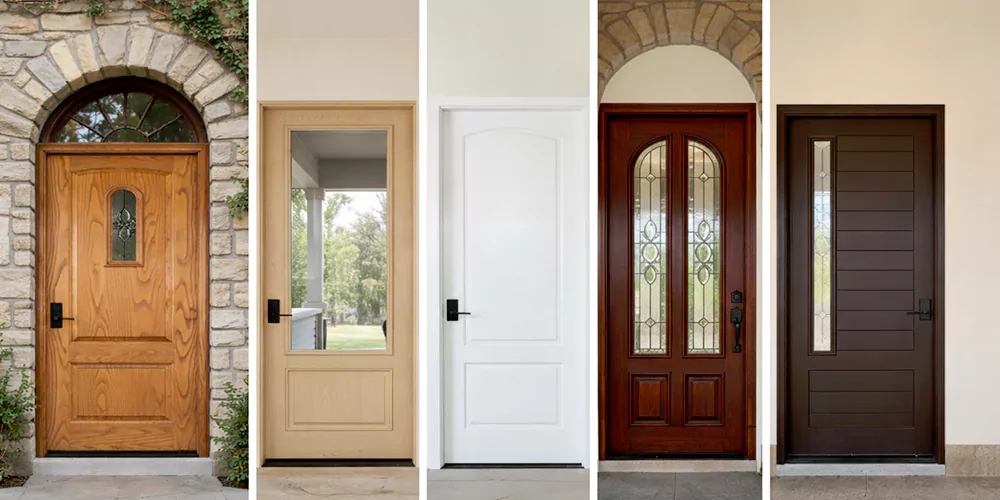
Different applications call for different wood choices. Here’s how to think about wood selection for common door and trim projects.
Front Entry Doors: This is your home’s first impression. Mahogany and oak offer excellent durability and upscale appearance. Cedar works well for craftsman or rustic styles. If painting, consider poplar or pine for cost savings. Impact-rated glazing or protective treatments help meet Florida Building Code requirements in our Wind-Borne Debris Region.
Interior Doors: Match your trim wood for a cohesive look. Poplar is perfect for painted doors. Oak, maple, or cherry work beautifully for stained applications. Solid wood or wood veneer over engineered cores both work well for interior doors.
Door Trim and Casing: This is where wood choice really shows. Door trim frames your openings and ties rooms together. Match your baseboard wood for consistency. If painting, poplar offers the best value. For stained trim, oak provides durability and character. Consider different molding types to create the right visual impact.
Exterior Door Frames: Structural strength matters here. Douglas fir, treated pine, and mahogany all work well. Your exterior door frame needs to support the door weight and resist weather exposure. Proper flashing and sealing are just as important as wood selection.
Custom Applications: Specialty doors and architectural details often feature premium woods such as walnut, cherry, and exotic species. These projects justify higher material costs with a unique visual impact.
Cost Considerations

Wood prices vary significantly based on species, grade, and market conditions. Here’s a general cost hierarchy from most to least expensive:
Premium Woods:
Walnut, genuine mahogany, cherry ($$$$)
Mid-Range Woods:
White oak, hard maple, African mahogany ($$$)
Budget-Friendly Woods:
Red oak, poplar, soft maple, Douglas fir ($$)
Economy Woods:
Pine, especially with knots ($)
Remember that material cost is only part of the total project cost. Installation labor, finishing work, and hardware add significantly to the final price. Sometimes, spending more on higher-quality wood saves money over the long term by reducing maintenance and replacement costs.
For most Central Florida projects, mid-range woods offer the best balance of performance, appearance, and value. Save premium woods for focal point areas where their beauty really shines.
Working with a Florida Door Supplier

When you’re ready to move forward with your door or trim project, working with a local supplier who understands Florida’s requirements makes everything easier.
At Titan Florida Doors, we help customers navigate wood choices for their specific needs. We stock quality doors, frames, hardware, and trim materials suitable for Central Florida’s climate. Our team understands FBC 8th Edition requirements and can guide you through options that meet code while matching your design goals.
We serve both residential and commercial projects across Central Florida, from custom homes in Lake Nona to multi-family developments in downtown Orlando. Whether you’re a homeowner planning a spring remodeling project or a contractor managing multiple properties, we provide the expertise and products to get it done right.
Frequently Asked Questions
Mahogany, cedar, and oak are excellent choices for exterior doors in Central Florida. Mahogany offers superior moisture resistance and stability. Cedar has natural oils that resist decay. Oak provides durability at a moderate price point. The key is proper finishing and sealing regardless of species. All exterior doors in Florida's Wind-Borne Debris Region must meet impact resistance requirements through impact-rated glazing or protective coverings.
Yes, pine works well for interior door trim in Florida, especially if you're painting. Southern yellow pine is harder and more stable than eastern white pine. Proper priming and painting protect pine from humidity. For exterior trim, consider synthetic materials or more rot-resistant woods like cedar for better long-term performance.
Red oak has a pinkish tone and more prominent grain pattern. White oak is more neutral in color with tighter grain. Both are durable and take stain well. White oak is slightly more water-resistant, making it better for exterior applications. Price difference is minimal. The choice usually comes down to color preference and grain visibility.
Look for straight grain with minimal knots (unless you want rustic character). The wood should be properly dried, typically 6-8% moisture content for interior applications. Check that boards are straight without cupping, bowing, or twisting. Higher grades cost more but waste less during installation. Ask your supplier about the grading system for the species you're considering.
It matters, but differently than for stained applications. For paint, you want wood that's stable, easy to work with, and takes paint smoothly. Poplar is excellent for painted trim and doors. Pine works well too but requires good priming. Avoid woods with heavy grain or high resin content as they can telegraph through paint over time.
Cedar and mahogany have the best natural moisture resistance. Teak and ipe (often used for decking) are extremely rot-resistant but expensive for doors and trim. For most Central Florida applications, proper finishing matters more than species selection. Well-sealed oak or maple perform better than poorly finished cedar.
Exterior doors need inspection and touch-up annually, with complete refinishing every 3-5 years depending on sun exposure and finish quality. South and west-facing doors face the harshest conditions. Interior doors rarely need refinishing unless damaged. Clean them periodically with appropriate wood cleaners.
Yes, but do it intentionally. Matching undertones helps different woods work together. For example, cherry and mahogany both have reddish tones. Oak and maple are both neutral. Avoid randomly mixing woods, it looks uncoordinated. One common approach: use one wood type for trim and doors, a complementary species for furniture or accents.
Hickory and hard maple are among the hardest domestic woods, both rating around 1,450 on the Janka scale. Brazilian cherry (jatoba) and ipe are even harder but costly. For most trim applications, you don't need maximum hardness. Oak or soft maple provide adequate durability at better prices.
Making Your Wood Choice
Choosing the right wood type for your doors and trim doesn’t have to be complicated. Start by identifying your priorities: budget, appearance, durability, and maintenance requirements. Consider Florida’s climate and how different woods perform in humid conditions.
For most projects, you can’t go wrong with these guidelines:
- Painted trim: poplar or pine
- Stained trim: oak, maple, or cherry
- Exterior doors: mahogany, cedar, or oak with proper finishing
- Interior doors: match your trim wood for consistency
- Budget projects: pine or poplar
- Premium projects: cherry, walnut, or mahogany
The wood you choose becomes part of your daily experience. Whether you’re touching a door handle, walking past trim, or welcoming guests through your front entry, quality materials make a difference you can feel and see.
Ready to explore wood options for your next door or trim project? Our team at Titan Florida Doors can help you find the right materials for your specific needs and budget.
Get Expert Help with Your Door Project
Whether you’re planning a residential remodel or managing a commercial development in Central Florida, we’re here to help. Our experienced team can guide you through wood selection, code compliance, and product options.
For Residential Projects: Request a quote for residential doors and get personalized recommendations for your home.
For Commercial Projects: Submit a bid request for commercial doors and let’s discuss your project requirements.
