

Introduction
If you have a dog, you already know the routine. You get up, walk to the door, let the dog out, wait, let the dog back in, and repeat that maybe a dozen times before lunch. A door with a built-in dog door changes all of that. Your pup comes and goes on their own schedule, and you get your morning back.
But choosing the right setup is more involved than it sounds. There are different door types that support pet doors, sizing considerations that matter a lot, and installation factors that can make or break the whole thing. Let’s walk through everything so you end up with a door that works well for both you and your dog.
Which Door Types Support a Dog Door?
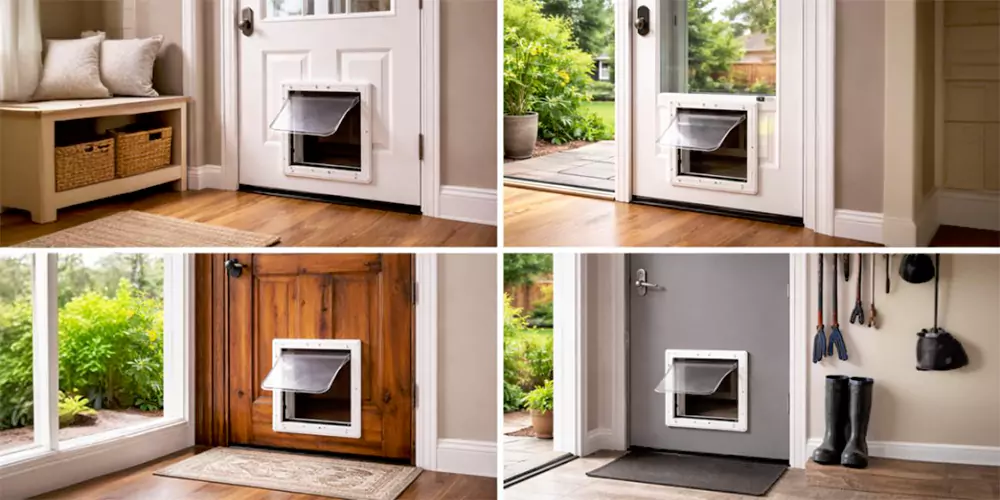
Not every door is a great candidate for a pet door installation. The material, construction, and location all play a role. Here is a breakdown of the main options.
This is the most common setup. A solid exterior door can have a pet door insert cut into it, or you can purchase a door with a dog door already built in from the factory. Steel and fiberglass exterior doors both work well. Steel doors in particular offer a sturdy, secure base that holds up over time, and the pet door flap can be sealed tightly to keep out drafts and insects.
If your home is in the Orlando area or anywhere else in Central Florida, exterior doors are also subject to the Florida Building Code (FBC) 8th Edition. Since Orange County falls within a Wind-Borne Debris Region, exterior doors need to meet impact resistance standards. That means your door with a dog door should carry a valid Florida Product Approval (FLPA) number. We can help you find options that meet code while still accommodating a pet door insert.
For more on choosing exterior doors that hold up in Florida conditions, check out our exterior door frames guide.
A storm door is the secondary door that sits in front of your main entry, typically made of aluminum with a glass or screen panel. A storm door with a dog door is a popular option because it lets your pet move through the screen while your main entry door stays open for ventilation. This setup works well on back doors and side entries.
The tradeoff is that storm doors are lighter and less insulated than solid exterior doors, so they work better as a secondary barrier rather than your main security layer. Great for backyards, but you will probably still want your main entry door closed behind them at night.
A front entry door with a built-in dog door is absolutely doable, but it takes some planning. You want a door that still looks polished from the street. Factory-built doors that come with dog doors pre-installed tend to look cleaner than retrofit cuts, with the flap sitting flush rather than looking tacked on. If curb appeal matters, going with a door that has the pet insert designed in from the start is worth the extra consideration.
Back doors are honestly the most practical location for a dog door. They typically lead to a fenced yard, so your dog can go in and out without much supervision. Back doors also get less aesthetic scrutiny, which gives you more flexibility on the style and size of the pet insert.
A solid steel back door with a built-in or retrofit pet door insert gives you a secure, weather-resistant setup that holds up in Florida's heat, humidity, and afternoon storms.
A security door or steel door with a dog door is a smart option if you want both pet access and peace of mind. Security doors are typically heavier-gauge steel with reinforced frames, so the pet door insert does not compromise the door's structural integrity the way it might with a thinner panel. The flap can also be fitted with a lock panel so you can seal it off at night or when you travel.
Sizing: Getting It Right
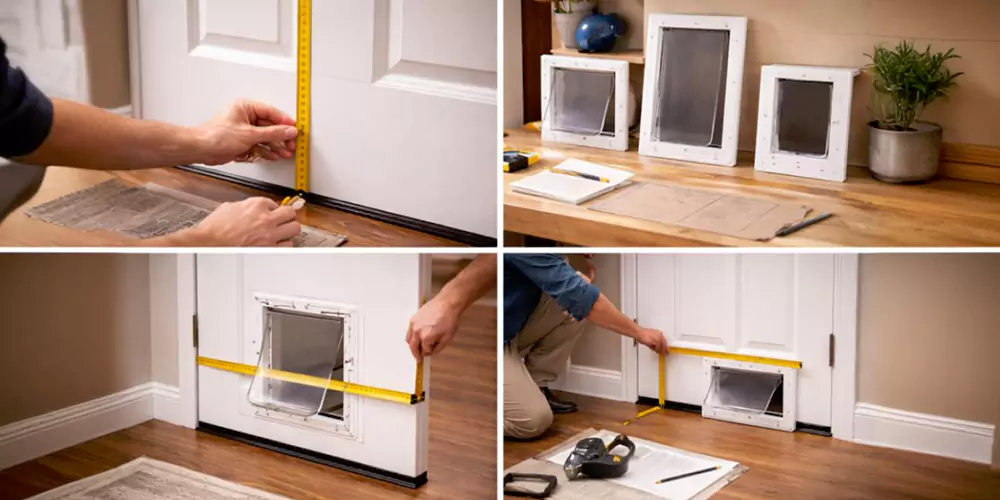
An undersized dog door is frustrating for your dog and can cause them to avoid using it altogether. Too large, and you lose energy efficiency and compromise security.
The general rule is to measure your dog’s shoulder width and height from the floor to their withers (the top of their shoulder blades). The opening should be about two inches wider than their widest point and tall enough that they can step through without ducking uncomfortably.
General sizing guide:
- Small (up to 20 lbs): opening around 7″ x 11″
- Medium (20 to 40 lbs): opening around 9″ x 13″
- Large (40 to 80 lbs): opening around 12″ x 16″
- Extra Large (80 lbs and up): opening around 15″ x 20″ or larger
For a door with a large dog door, make sure the door panel itself is wide enough to accommodate the insert without weakening the surrounding structure. A 36-inch door typically handles large pet inserts better than a 30-inch door.
Built-In vs. Retrofit
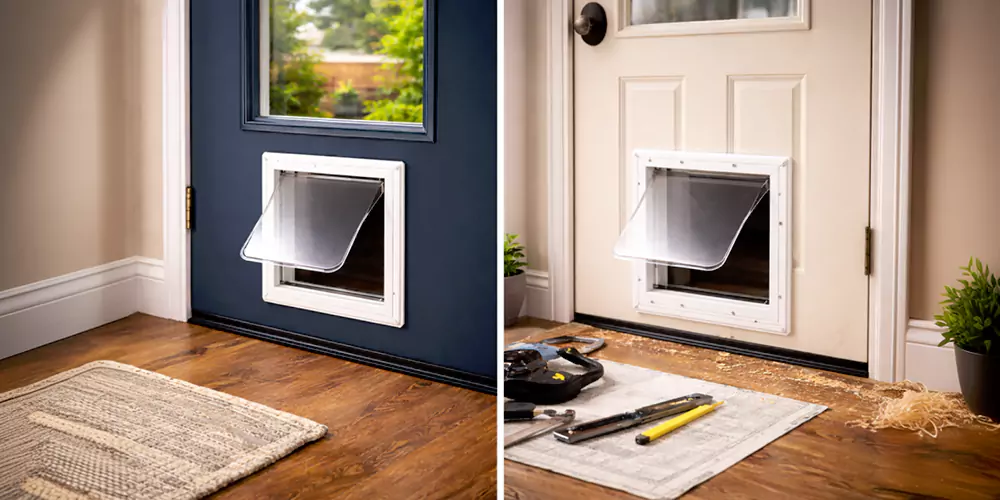
You have two main paths to getting a pet door into your exterior door.
Factory-built doors that come with an integrated pet door are the cleaner option. The insert is part of the design from the start, so the flap, frame, and weatherstripping are all built to work together. These doors typically look better, seal tighter, and hold up longer than retrofit cuts.
If you are already replacing an exterior door or entry door, opting for one with a built-in dog door just makes sense. You are doing the work once and ending up with a cohesive, purpose-built product.
If your current door is in good shape and you do not want to replace the whole thing, a retrofit insert cut into the existing panel is a workable option. The key is working with a professional who can cut the opening cleanly, frame it properly, and install a weathertight insert. A sloppy cut leads to drafts, water intrusion, and a flap that never quite seals.
In Florida, the quality of the seal around a retrofit insert matters more than in most other climates. Heat, humidity, and the occasional heavy rain event can exploit any gaps quickly. Our team can help you figure out whether a built-in or retrofit approach makes more sense for your specific door and situation.
Features Worth Paying Attention To
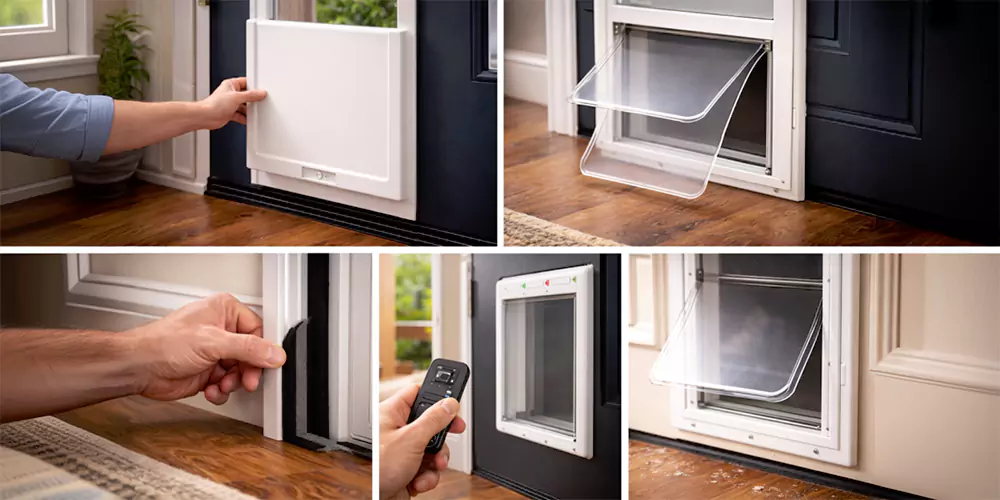
A few things worth looking for:
- Locking cover panel: A rigid panel that slides over the opening at night or when you travel. Essential for both security and energy efficiency.
- Double flap design: Two overlapping flaps create a better air seal than a single flap, which is especially valuable when you are trying to keep the AC in during a Florida summer.
- Weatherstripping: Good weatherstripping around the frame prevents drafts, insects, and moisture from sneaking through the edges.
- Sensor-equipped options: Some pet doors use a collar sensor that only opens for pets wearing the correct tag, keeping wildlife and neighborhood animals out.
- Flap material: Vinyl flaps are standard and affordable. Thicker, clear vinyl holds up better under UV exposure and heat.
Installation Considerations
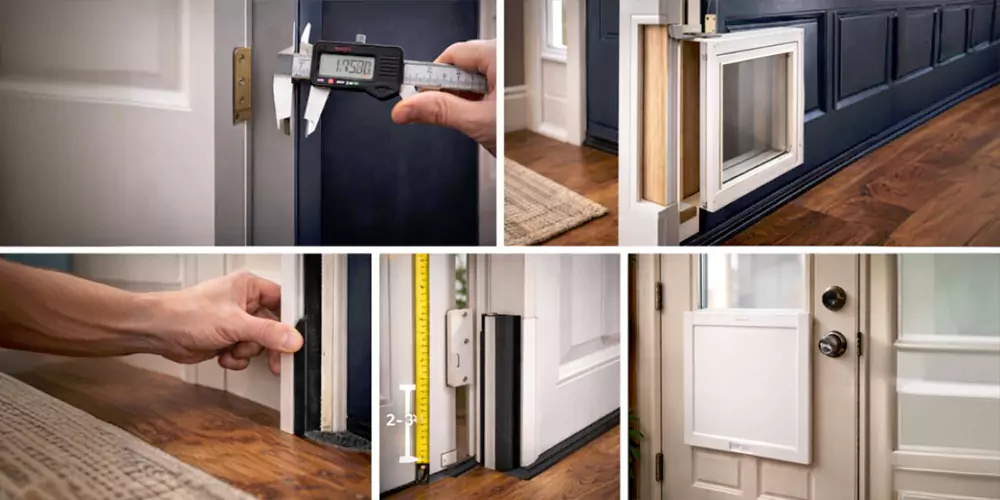
Installing a dog door into an exterior door is more involved than it looks. A few things to keep in mind before you get started:
Door thickness: Most pet door frames are designed for standard door thicknesses of 1-3/4″. If your door is thicker, you may need an extension frame to make everything seat correctly.
Frame and weatherstripping condition: The flap needs to seat against a clean, solid frame edge. If the weatherstripping around your existing door is worn, addressing that at the same time is a smart move. Read more about what goes into a solid door frame setup in our exterior door frames guide.
Height placement: The bottom of the pet door should sit about 2 to 3 inches above the bottom of the door. This keeps the threshold dry and prevents your dog from catching a paw on the sill.
Security: A pet door does create an opening in your door. For large dog doors, consider whether the opening is wide enough for an intruder to reach through and access a deadbolt. A double-cylinder lock or a locking cover panel addresses this concern without sacrificing convenience.
Thinking About Pairing with a New Door?
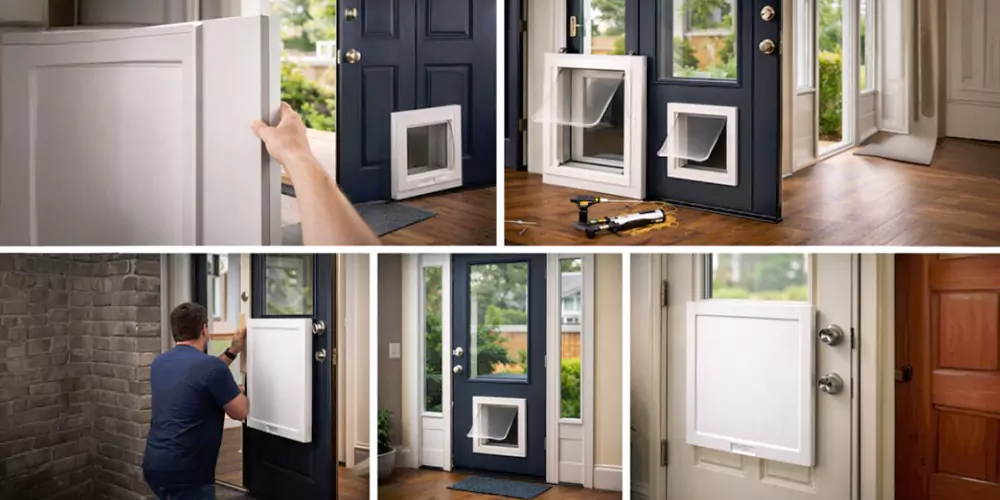
If your current exterior door is aging, combining a new door purchase with a pet door insert is a practical move. Spring is one of the better times for this kind of project in Central Florida. Contractors are active, temperatures are manageable, and you can get everything buttoned up before summer heat arrives.
We covered the best approaches to spring door upgrades in our spring door remodeling guide if you want ideas on what else to tackle while you are at it.
A new steel exterior door with an integrated pet door, paired with fresh door trim and updated hardware, is one of those home improvements that genuinely pays off in daily convenience and long-term curb appeal.
Frequently Asked Questions
Most solid exterior doors can accommodate a pet door insert, but the door needs to be structurally sound and thick enough to support the frame properly. Steel and fiberglass doors work especially well. Hollow-core doors are not suitable for pet door inserts.
A well-installed dog door with a double-flap design and quality weatherstripping has minimal impact on your cooling costs. Poor-quality inserts or sloppy installations can let conditioned air escape, which is a bigger deal in Central Florida heat. Investing in a quality insert upfront pays off quickly.
The door itself needs to meet FBC standards for your zone. If you are in Orange County or anywhere in Central Florida's Wind-Borne Debris Region, your exterior door needs a valid Florida Product Approval (FLPA) number. The pet door insert does not require separate certification, but it should not compromise the door's structural integrity or weatherproofing.
A steel exterior door with an integrated pet insert and a locking cover panel is the most secure combination. Security doors with reinforced frames handle pet door inserts well because the added door gauge maintains rigidity even with the cutout.
Measure your dog's shoulder width and the height from the floor to the top of their shoulder blades. Add about 2 inches to each measurement for a comfortable fit. When in doubt, size up. A slightly larger opening is far better than one your dog has to squeeze through.
Retrofit installations into existing doors are DIY-possible if you are comfortable with tools and precise measurements. For new door installations, proper weatherproofing, and Florida Building Code compliance, working with a professional reduces the chance of a costly mistake.
We work with homeowners and contractors across Central Florida to source the right door solutions for all kinds of projects. Reach out for a residential quote and our team can walk you through exterior door options that accommodate pet access while meeting Florida's building standards.
Ready to Talk Through Your Options?
Whether you are replacing an aging back door, upgrading your front entry, or just looking for the cleanest way to give your dog some independence, Titan Florida Doors is here to help.
Homeowners can request a residential quote here. Contractors and commercial clients can submit a bid request here. Our team serves the Orlando metro and surrounding Central Florida communities and is happy to talk through your specific project.
