

Introduction
It’s one of the smallest pieces of hardware on your door, and most people barely notice it. But the moment a door won’t latch properly, or a latch gets stuck mid-swing, the strike plate suddenly becomes the center of attention. If you’re dealing with a door that drags, refuses to close cleanly, or just doesn’t feel as secure as it should, there’s a good chance the strike plate is involved.
This guide covers everything you need to know about door strike plates: what they do, the different types available, how to size them correctly, and how to troubleshoot the most common problems. Whether you’re working on a residential entryway in Orlando or specifying hardware for a commercial build across Central Florida, the details here will help you get it right.
What Is a Door Strike Plate?
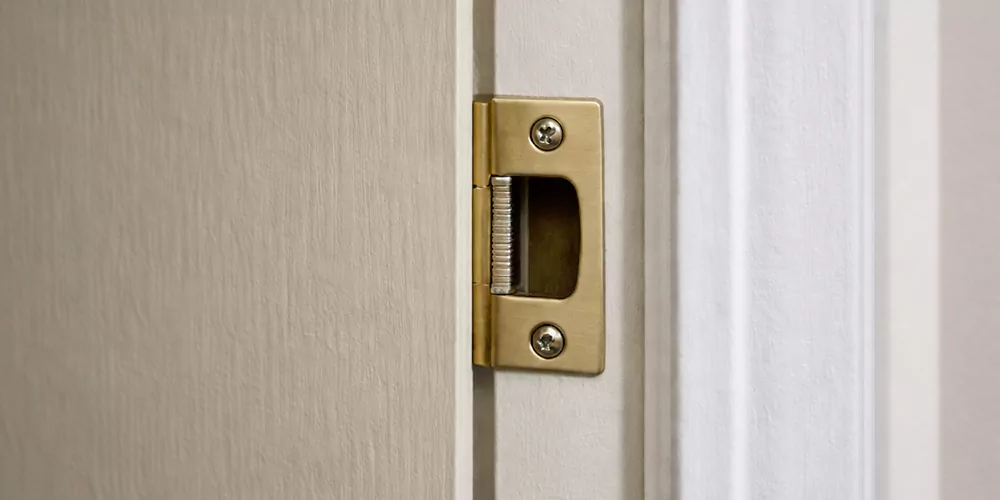
A door strike plate is the metal plate mounted on the door jamb that receives the latch bolt or deadbolt when the door closes. When you turn a handle or push a door shut, the latch extends outward and catches inside the cutout on the strike plate, keeping the door in position.
Without a strike plate, the latch would just dig into the wood of the jamb over time. The strike plate protects the jamb, reinforces the connection between door and frame, and plays a major role in how secure the door actually is.
It sounds simple, and functionally it is. But the type, size, and installation quality of a strike plate make a bigger difference than most people expect.
Types of Door Strike Plates
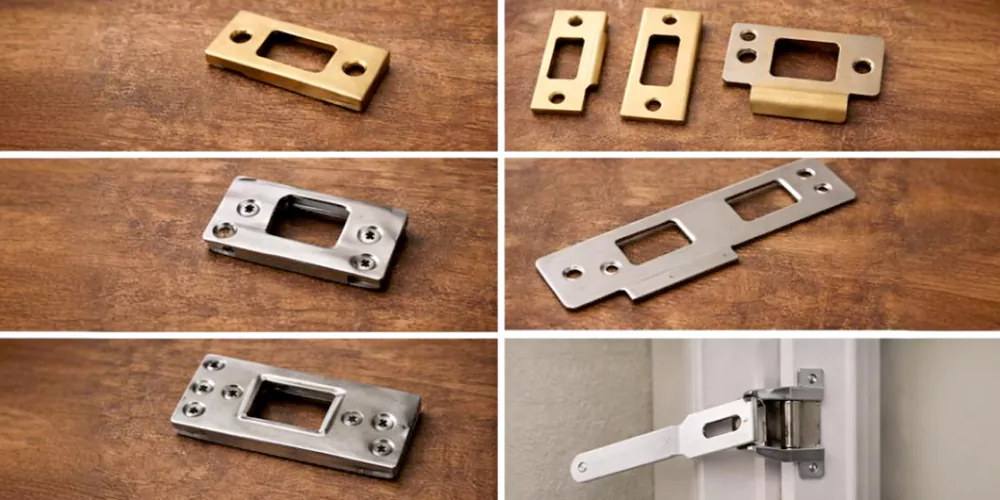
Walk into any hardware store, and you’ll find a wall of options. Here’s how to make sense of them.
This is the most common type. A lip strike plate has a small curved flange - the "lip" - that guides the latch into the mortise as the door closes. Most residential door hardware comes with one included, and they work fine for interior doors and standard exterior applications.
These are not the same thing, even though they look similar. A door latch strike plate has a single, smaller mortise that catches the spring latch. A deadbolt strike plate has a larger, boxed mortise to receive the thicker deadbolt throw. Many entry doors use a combination strike plate that accommodates both on one plate, which simplifies things considerably.
An adjustable strike plate has a moving tab or ramp inside the mortise that shifts slightly to account for a latch that doesn't quite line up. These are useful when the door has settled or warped slightly and the latch catches at an angle. They're not a permanent fix for a severely misaligned door, but for minor issues they do the job well.
Sometimes called a door strike plate extender, these longer versions provide more coverage over the door jamb. They're popular as a security upgrade because they spread load over a larger area of the frame, making it much harder to kick a door in. Standard plates might use two screws; extended plates often use four or more and work best when paired with 3-inch screws that reach the wall framing behind the jamb.
A dedicated security door strike plate is typically made from heavier gauge steel, sometimes with a reinforced box behind the mortise (called a box strike or deadbolt strike box). The recessed box prevents the bolt from splitting through the wood during a forced entry attempt. If you're replacing a standard builder-grade plate on an exterior door, upgrading to a security strike plate is one of the highest-value hardware swaps you can make.
Storm doors use a separate, often proprietary strike plate specific to the door brand and latch mechanism. These are not usually interchangeable with standard residential hardware, so check your door brand before ordering a replacement.
Strike Plates for Metal Door Frames
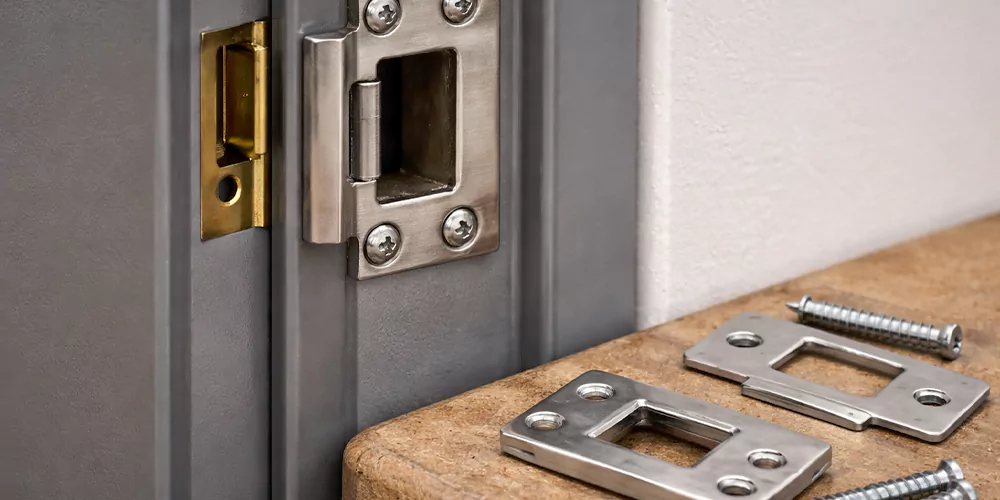
Commercial and heavy-duty residential doors in Central Florida often use hollow metal door frames rather than wood jambs. The strike plate installation process differs here, and not all consumer-grade strike plates are suitable for this application.
With a metal door frame, the strike plate is typically welded, riveted, or screw-mounted directly into the frame profile. Hollow metal frames are manufactured with strike preparation already built in, meaning the cutout location is standardized and coordinated with the specified lock hardware.
For commercial projects, matching the strike plate to the lock trim and frame prep matters. A cylindrical latchset requires a different strike mortise than a mortise lock body. Getting this wrong creates real problems during installation and can affect both performance and code compliance.
Steel door systems often call for a full lip or half-surface strike, depending on the frame profile and the hardware schedule. If you’re bidding a commercial project or multifamily build in the Orlando area, working with a supplier who can coordinate the full door, frame, and hardware package saves significant headaches down the line.
How to Adjust a Door Strike Plate
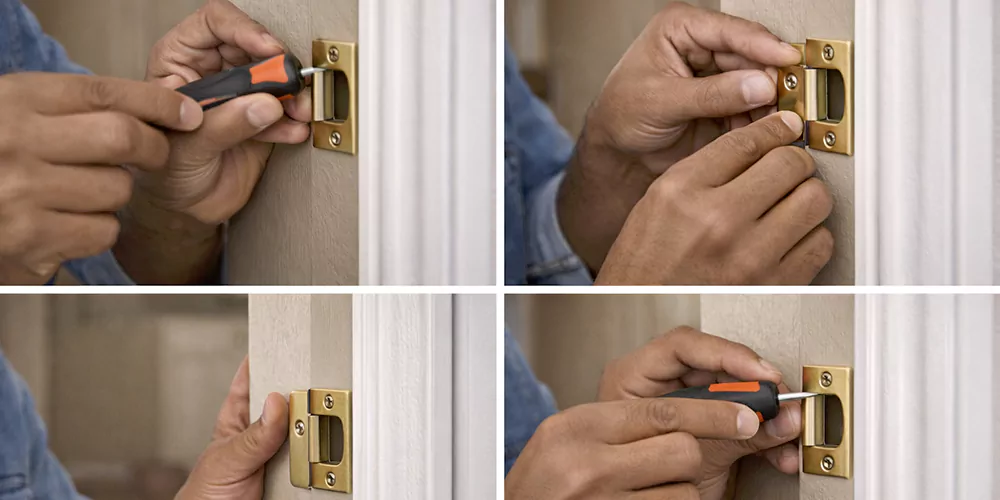
This is one of the most searched topics around strike plates, and for good reason. Doors move. Humidity causes wood to swell. Homes settle. A door that latched perfectly a couple of years ago might start dragging or refusing to catch.
Here’s how to approach it: First, figure out where the latch is actually hitting. Close the door slowly and watch where the latch bolt contacts the strike plate. Rub a little lipstick or crayon on the end of the latch, close the door, and open it back up. The mark left on the strike plate tells you exactly where the latch is landing relative to the mortise.
If the misalignment is minor – less than 1/8 inch or so – you may be able to file the edge of the mortise opening to give the latch a bit more room. A small metal file works well here. Go slowly.
For larger gaps, you need to either move the strike plate or address the underlying reason the door has shifted. Moving the plate means filling the old screw holes with wood glue and toothpicks, letting them dry fully, then repositioning the plate and drilling new pilot holes.
If the door is warped or the frame has moved significantly, adjusting the strike plate alone won’t solve the problem. That’s a door or frame issue that needs a closer look.
When a Door Won't Latch: Strike Plate Troubleshooting
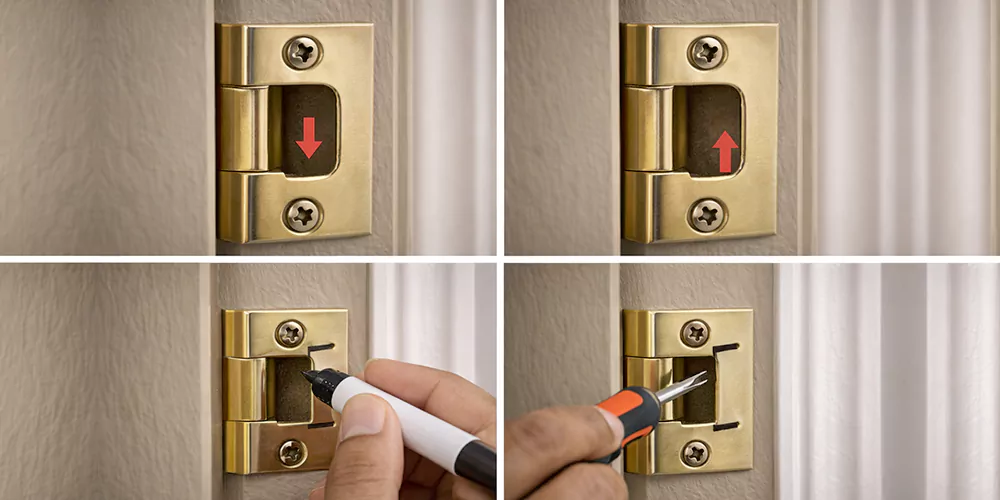
Door latch stuck in the strike plate is usually caused by the latch spring weakening, the latch tab getting bent, or the plate being installed too deep. When the latch extends into the mortise but doesn’t spring back out when the door is opened, the geometry is off somewhere. Check that the latch is moving freely when you press it manually, and inspect the strike plate for any burrs or damage that might be gripping the latch face.
If a door won’t latch at all and the latch seems to be moving normally, check whether the hole in the strike plate is the right size for the latch bolt. Older hardware and newer replacement plates don’t always line up dimensionally.
A door strike plate shim – a thin piece of material placed behind the plate – can bring the face out flush with the jamb if the mortise was routed too deep. Sheet metal works well for this, though a purpose-made shim is cleaner.
Commercial Door Strike Plates: What to Know
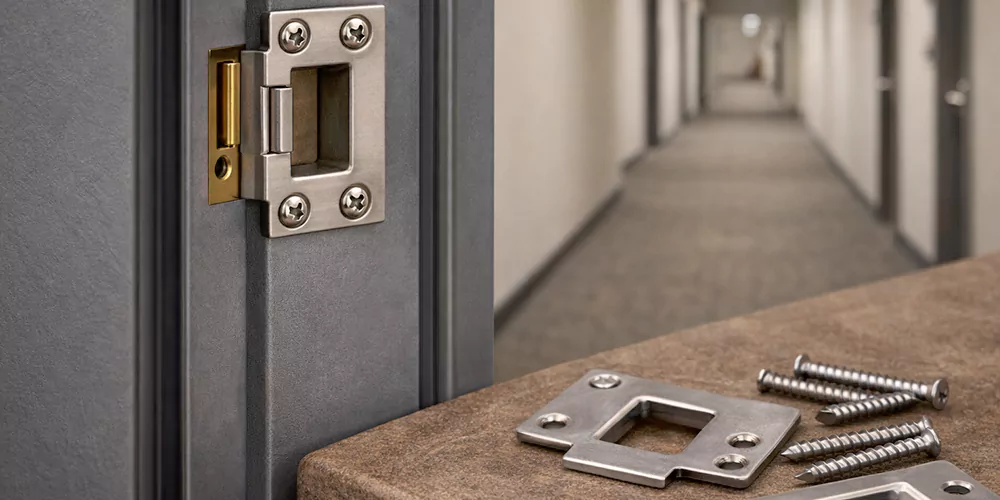
Most commercial lock hardware is specified to ANSI/BHMA standards, and the strike plate is part of that coordination. A Grade 1 commercial latch or lock should be paired with a Grade 1 strike, and the plate dimensions need to match the lock face exactly. Mismatched hardware can create warranty issues and affect fire door compliance.
For fire-rated door assemblies, the strike plate must be part of the listed hardware set. You cannot swap in an aftermarket strike plate on a listed fire door without potentially voiding the assembly’s rating. The Florida Building Code (FBC) 8th Edition (2023) governs these requirements statewide, and commercial projects in Orange County and across Central Florida need to coordinate hardware selection accordingly.
For commercial bids across the Orlando metro, Titan Florida Doors works with project teams through the full hardware schedule, including strike coordination. It’s much cleaner to specify the door, frame, and hardware together than to piece them together from multiple sources
Door Strike Plate Sizes: A Quick Reference
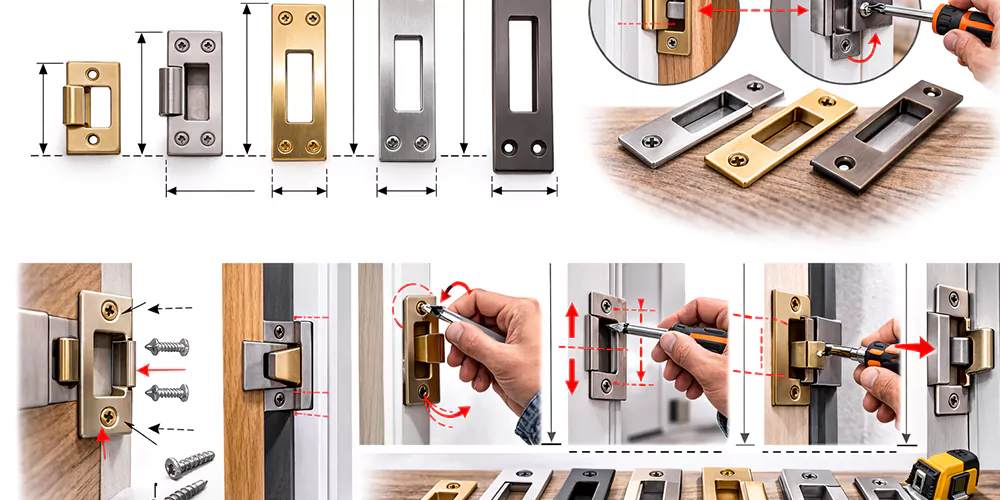
Strike plate sizing generally follows the faceplate dimensions of the latch or lock body. Standard residential lip strike plates are typically 2-3/4 inches tall with a 1-inch latch mortise opening. Combination plates for latch and deadbolt run longer, often 7 to 8 inches, to cover both bolt positions. Extended security plates may run 12 inches or more.
For hollow metal frame applications, ANSI standard strike dimensions apply. The most common are ANSI A115.1 (for cylindrical locks) and ANSI A115.2 (for mortise locks). Your hardware supplier or door manufacturer should confirm the correct prep dimensions for the specified hardware.
Strike Plate Finishes and Materials
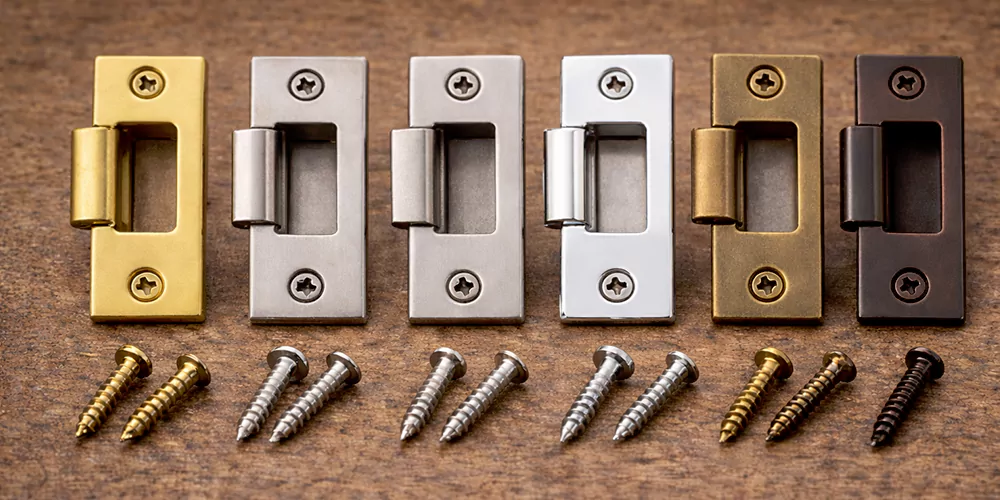
Most residential strike plates are made from steel with a plated finish, brass, or bronze. The finish should match the rest of the door hardware for visual consistency. For exterior applications in Florida’s climate, corrosion resistance matters. Stainless steel or solid brass hold up significantly better than zinc or chrome-plated options in humid environments.
For steel door applications, a matching steel strike plate with a powder coat finish is the most durable choice and keeps the whole assembly consistent – especially for the hollow metal frame and door packages common in commercial construction across Central Florida.
Frequently Asked Questions
They are the same thing. "Striker plate" is simply an alternate name used interchangeably across different regions and manufacturers. You'll see both terms in product listings.
Extended strike plates work with most wood-jamb doors that are deep enough to accommodate longer screws. Measure the jamb thickness before buying, and confirm the plate length doesn't extend past the jamb stop into a visible area. For metal-frame doors, a standard ANSI-spec plate is more appropriate.
If the plate is physically damaged, bent, or the mortise is torn out, replace it. If the latch simply isn't aligning cleanly, try adjusting the position first before replacing.
Use 3-inch steel screws to reach past the door jamb into the wall framing. Standard builder hardware typically comes with 3/4-inch screws that only grab the jamb, providing minimal holding strength.
Yes. Fire-rated door assemblies require strike plates included in the listed hardware set. Substituting non-listed hardware can void the fire rating. Always specify strike plates that match the lock manufacturer's listing for the door assembly.
Usually, a combination of latch spring weakness and the strike plate mortise gripping the latch face due to slight misalignment. Check the latch spring first, then inspect whether the mortise edges have any burrs or deformations that could catch the latch.
Significantly. A longer plate with more screw points distributes kick-in force over a larger area of the jamb and into the wall framing. A 12-inch or longer security strike plate with 3-inch screws is a meaningful upgrade over a standard 2-3/4 inch plate.
Need Help Specifying the Right Door Hardware?
A door strike plate might seem like a minor detail, but it’s the kind of thing that causes real problems when it’s wrong. Whether you’re replacing hardware on a residential door in the Orlando area or putting together a hardware schedule for a commercial project anywhere in Central Florida, getting the right plate coordinated with the right lock and frame matters.
Titan Florida Doors supplies doors, frames, and hardware for both residential and commercial projects across Central Florida. Reach out and let’s get it sorted.
