

Introduction
Door moulding serves as the finishing touch, transforming a basic door installation into a polished architectural element. Whether you’re building a new home in Orlando, renovating a commercial space, or replacing exterior door frames after hurricane damage, understanding the different types of door moulding helps you make informed decisions about aesthetics, durability, and code compliance.
This guide covers everything you need to know about door trim molding options, from traditional profiles to modern minimalist styles, with specific considerations for Florida’s climate and building requirements.
Understanding Door Moulding Components

Before exploring specific door moulding types, it’s helpful to understand the basic components of door trim systems:
Casing forms the primary decorative border around the door opening, covering the gap between the door frame and wall. This is the most visible element of door trim molding and significantly impacts the overall appearance.
Head Casing runs horizontally across the top of the door frame, often featuring more elaborate detailing than the side casings.
Side Casings extend vertically down both sides of the door frame, connecting the head casing to the floor or baseboard.
Plinth Blocks are optional decorative blocks placed at the bottom of side casings where they meet the baseboard, adding visual weight and traditional character.
Rosette Blocks serve as decorative corner pieces where head casing meets side casing, eliminating the need for mitered corners.
Door Stop Molding prevents the door from swinging too far when closing, protecting both the door and wall from damage.
These components work together to create a cohesive look while serving practical purposes like hiding construction gaps and protecting wall edges from wear.
Types of Door Moulding by Profile Style
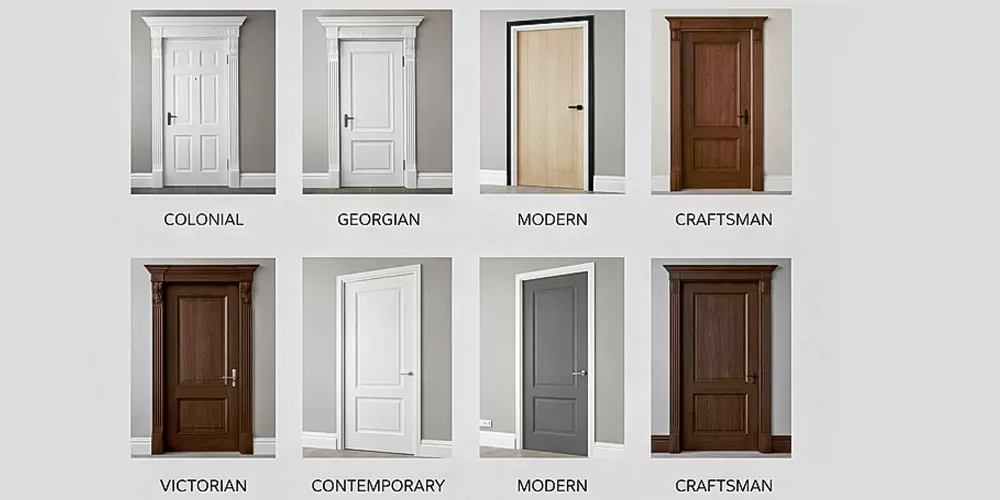
The profile or cross-sectional shape of door trim molding defines its visual character and architectural style. Understanding different types of door moulding profiles helps you select options that complement your space.
Colonial door moulding features a smooth, curved profile that resembles a clamshell. This traditional style works well in both residential and commercial applications, offering a timeless look that complements a range of architectural styles. The simple curves add visual interest without overwhelming the space, making colonial trim one of the most popular door moulding types for Florida homes.
Craftsman-style door trim features clean lines with minimal ornamentation, typically consisting of flat boards with subtle reveals or step details. This door frame trim style emphasizes horizontal and vertical elements, creating a sturdy, handcrafted appearance that complements mission-style architecture. Craftsman moulding works particularly well in commercial buildings and modern homes seeking a balance between traditional craftsmanship and contemporary simplicity.
Victorian door trim features ornate detailing, including multiple curves, beads, and decorative elements. These elaborate profiles create dramatic shadows and rich visual texture, perfect for historic restorations or homes embracing traditional elegance. While less common in modern Florida construction, Victorian moulding adds period-appropriate character to older properties in historic districts.
Contemporary door moulding features flat or subtly beveled profiles with clean, square edges. This streamlined approach creates an understated frame that lets door design take center stage. Modern trim profiles work exceptionally well with flush doors and contemporary architectural styles, offering a sophisticated look without traditional ornamentation.
Backband trim adds an extra layer of molding around standard casing, creating depth and visual interest. This door moulding style allows you to start with a simple, flat casing and add a decorative backband for a custom look. The layered approach provides flexibility in achieving specific design effects while simplifying installation compared to purchasing elaborate single-piece profiles.
Door Trim Material Options
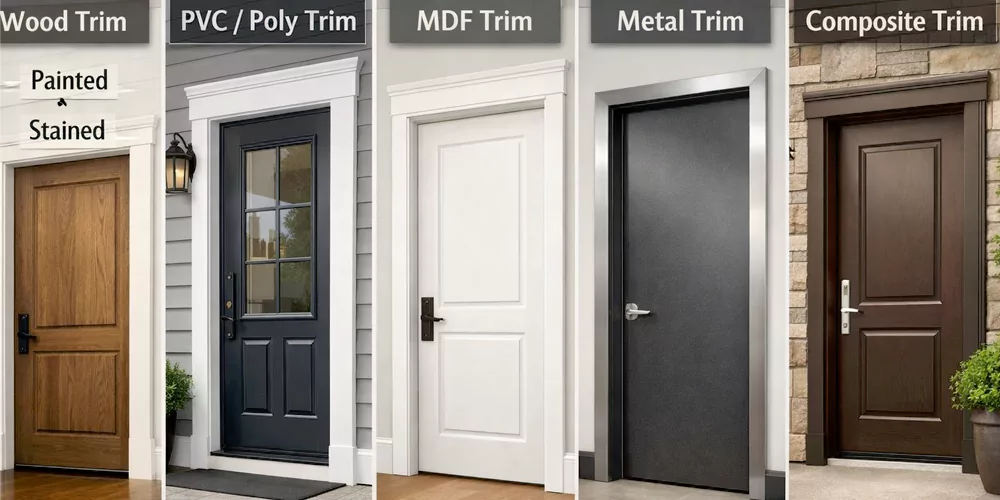
Material selection significantly impacts the performance, appearance, and longevity of door moulding, especially in Florida’s humid climate.
Traditional wooden trim remains popular for its natural beauty and workability. Pine offers affordability and easy customization through painting, while hardwoods like oak and maple provide superior durability for high-traffic commercial applications. However, solid wood requires careful finishing and maintenance in Florida's moisture-rich environment to prevent warping and rot.
For exterior door frames and outdoor applications, wooden trim must be adequately sealed and maintained. Many Orlando-area contractors recommend synthetic alternatives for exterior use to avoid moisture-related issues.
Medium-density fiberboard (MDF) provides a smooth, consistent surface ideal for painted finishes at a lower cost than solid wood. Pre-primed MDF trim simplifies painting while resisting the grain raising and splitting that can affect natural wood. However, standard MDF is not suitable for exterior applications or high-moisture areas without special moisture-resistant formulations.
Synthetic trim profiles offer excellent moisture resistance, making them ideal for Florida applications. PVC moulding won't rot, warp, or support mold growth, maintaining its appearance with minimal maintenance. While initially more expensive than wood, the long-term durability and reduced maintenance make PVC an economical choice for both residential and commercial projects.
These materials work particularly well around hurricane impact doors, where moisture resistance and dimensional stability are essential for maintaining weather seals.
Composite materials combine wood fibers with synthetic binders, offering a middle ground between natural wood and fully synthetic options. These door moulding types resist moisture better than solid wood while maintaining a more wood-like appearance and feel than vinyl alternatives.
Selecting Door Moulding for Florida Applications

Florida’s unique climate and building codes create specific considerations for door trim selection, particularly in Central Florida’s Wind-Borne Debris Region.
High humidity, intense sun exposure, and frequent temperature fluctuations affect door moulding performance. Materials must resist moisture absorption, prevent mold growth, and maintain dimensional stability through seasonal changes. For Orlando and Orange County projects, moisture-resistant materials like PVC or properly sealed wood provide the best long-term results.
While door moulding itself doesn't require specific code approvals, it must integrate properly with door frame systems that meet the requirements of the 8th Edition of the Florida Building Code. In Wind-Borne Debris Regions, exterior trim installation must not compromise door system integrity or impact resistance. Proper installation maintains weather seals and structural connections required for code compliance.
Door trim should not interfere with Florida Product Approval (FLPA) certified door assemblies or affect their tested performance characteristics.
Door moulding types complement door design for a cohesive appearance. Panel doors pair nicely with traditional profiles like colonial or craftsman trim, while flush modern doors look best with minimalist moulding. For commercial applications with hurricane-rated doors, choose trim profiles that maintain a professional appearance while accommodating the typically heavier door frames.
Installation Considerations and Costs
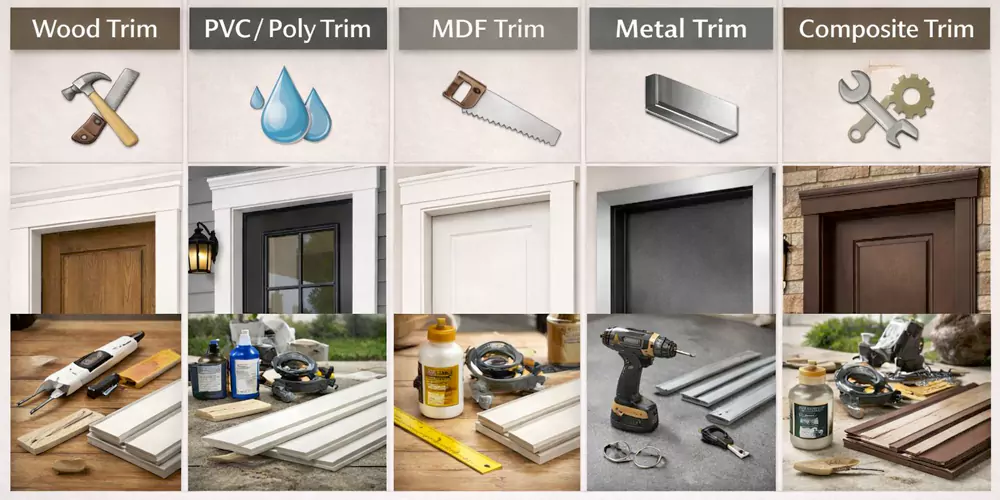
Professional installation ensures proper fit, alignment, and weather protection, particularly for exterior applications where improper installation can compromise performance.
Miter joints create clean corners by cutting trim at precise 45-degree angles, ideal for most door moulding types with profiled edges. Butt joints use straight cuts with one piece meeting another at 90 degrees, working best with flat trim profiles. Rosette and plinth block installations eliminate the need for precise angle cuts while adding decorative elements.
Professional installation of door trim typically ranges from $150 to $400 per door opening, depending on complexity, profile type, and material. Simple colonial trim with basic mitered corners falls at the lower end, while elaborate Victorian profiles with rosettes and plinth blocks require more labor and cost more. Commercial installations may benefit from volume pricing when trimming multiple doors.
Door moulding material costs vary significantly by type. Pine casing runs $2 to $6 per linear foot, while oak and other hardwoods range from $5 to $15 per linear foot. MDF trim offers economy at $1.50 to $4 per linear foot, and PVC ranges from $3 to $10 per linear foot, depending on profile complexity. Standard door openings require approximately 18 to 22 linear feet of trim material.
Maintenance and Longevity

Proper maintenance extends the life of door moulding and preserves its appearance, with requirements varying by material type.
Painted wood trim needs repainting every 3 to 5 years in Florida’s climate, with more frequent touch-ups around exterior doors exposed to direct sun and weather. Regular inspection for paint damage helps prevent moisture intrusion that can lead to rot. PVC and vinyl moulding requires only occasional cleaning with mild soap and water, maintaining appearance for 20 years or more without repainting.
MDF trim performs well indoors with minimal maintenance, but must be immediately repainted if moisture damage occurs to prevent swelling and deterioration.
Making the Right Choice for Your Project

Selecting appropriate door moulding types involves balancing aesthetics, performance requirements, budget, and maintenance considerations. For Central Florida residential projects, moisture-resistant materials like PVC or well-sealed wood in traditional profiles provide reliable performance. Commercial applications often benefit from durable hardwood or composite trim that withstands heavy use while maintaining a professional appearance.
Consider the entire door system when selecting trim, ensuring the materials and installation methods complement the frame construction and meet the Florida Building Code requirements for your specific location.
Need help selecting the right door trim molding for your Florida project? Contact Titan Florida Doors for expert guidance on moulding options that work with your door systems and meet local building codes in Orlando and throughout Central Florida.
Frequently Asked Questions
Door casing refers explicitly to the molding that frames the door opening and covers the gap between the door jamb and the wall. Door trim is a broader term that includes casing and additional elements such as baseboards, crown molding, and other decorative trim pieces in the same room. When discussing door frame trim, most people refer to the casing component, though technically, trim encompasses the entire decorative package.
Colonial or clamshell profiles remain the most popular door moulding types in Florida due to their versatility and timeless appeal. Craftsman-style trim has gained popularity in modern Florida homes, offering clean lines that complement contemporary architecture. For exterior applications around hurricane impact doors, PVC moulding in colonial or simple flat profiles provides the best combination of traditional appearance and weather resistance for Orlando-area homes.
While you can use similar profile styles, exterior door moulding requires weather-resistant materials that withstand Florida's climate. PVC, composite, or properly sealed hardwood works well for exterior trim, while interior doors offer more material flexibility, including MDF and softwood options. Exterior trim should integrate with weather seals and not compromise the door system's performance in accordance with Florida Building Code requirements. Interior trim focuses more on aesthetics without the same durability demands.
Match door trim profiles to your home's architectural period and details. Traditional homes with classic architecture pair well with colonial, Victorian, or craftsman door moulding types featuring curves and detailed profiles. Contemporary homes look best with minimalist flat trim or subtle beveled profiles that create clean lines. For commercial buildings, choose professional-looking trim that complements the door style without overwhelming the space. Review existing trim elsewhere in the building for consistency.
Hardwood door moulding, like oak or maple, offers the best durability for high-traffic commercial applications, resisting dents and wear from frequent use. PVC offers excellent long-term performance, superior moisture resistance, and minimal maintenance requirements. For exterior commercial doors, PVC outperforms wood by eliminating rot, warping, and paint failure issues. Composite materials offer a middle ground with good durability and lower cost than solid hardwood.
Hurricane-rated doors themselves don't require special trim profiles, but installation must not compromise the door system's tested performance. Exterior trim around impact-resistant doors should be moisture-resistant, such as PVC, to prevent deterioration and damage to weather seals. Ensure trim installation doesn't interfere with door operation, strike alignment, or the continuity of impact-resistant components. Work with experienced contractors familiar with installing trim around Florida Product Approval-certified door systems.
Material costs for door trim range from $50 to $200 per door opening, depending on profile complexity and material quality. Professional installation costs $150 to $400 per door, depending on the profile's complexity and whether you're adding new trim or replacing existing moulding. Exterior door trim installations typically cost more due to weather-sealing requirements and more demanding installation standards. For multiple doors, contractors often offer volume pricing that reduces per-door costs in larger residential or commercial projects.
